




In the construction industry, gypsum boards have long been a staple due to their versatility, affordability, and ease of installation. As a leading supplier of Automatic Paperless Gypsum Board Production Lines, I am often asked about the raw materials used in these production lines. In this blog post, I will delve into the various raw materials that are essential for the efficient and high - quality production of paperless gypsum boards.
Gypsum
The primary raw material in gypsum board production is, of course, gypsum. Gypsum is a soft sulfate mineral composed of calcium sulfate dihydrate (CaSO₄·2H₂O). It is abundantly available in nature and can be mined from gypsum deposits around the world. The quality of gypsum can vary depending on its source, and it is crucial to select high - grade gypsum for the production of gypsum boards.
High - quality gypsum has a high purity level, which means it contains a minimal amount of impurities. Impurities can affect the strength, setting time, and overall quality of the gypsum board. Gypsum is typically crushed and ground into a fine powder before being used in the production process. This powder is then mixed with water to form a slurry, which is a key step in the manufacturing of gypsum boards.
Additives
To enhance the properties of gypsum boards, various additives are used in the production process. These additives can improve the strength, fire resistance, water resistance, and other characteristics of the boards.
Starch
Starch is one of the commonly used additives. It acts as a binder, helping to hold the gypsum particles together and improve the strength of the board. Starch also helps to control the setting time of the gypsum slurry, ensuring that the board can be formed and dried efficiently.
Fibers
Fibers such as glass fibers or cellulose fibers are added to the gypsum slurry to enhance the board's strength and durability. Glass fibers, in particular, can significantly improve the board's resistance to cracking and impact. Cellulose fibers, on the other hand, are more environmentally friendly and can also contribute to the board's insulation properties.
Retarders and Accelerators
Retarders and accelerators are used to control the setting time of the gypsum slurry. Retarders slow down the setting process, which is useful when there is a need for a longer working time during the production process. Accelerators, on the contrary, speed up the setting time, allowing for faster production and drying of the boards.
Fire - Resistant Additives
For Fireproof Gypsum Board Production Line, fire - resistant additives are added to the gypsum slurry. These additives can include chemicals such as borates or phosphates, which can help to reduce the flammability of the board and increase its fire - resistance rating.
Water - Repellent Additives
In the case of Waterproof Gypsum Board Production Line, water - repellent additives are used. These additives can be silicone - based or other hydrophobic materials that prevent water from penetrating the board, making it suitable for use in wet areas such as bathrooms and kitchens.
Water
Water is a crucial component in the production of gypsum boards. It is used to mix with the gypsum powder to form a slurry. The amount of water used in the process is carefully controlled, as it can affect the consistency of the slurry and the final properties of the board. Too much water can result in a weaker board, while too little water can make the slurry difficult to work with.


During the production process, most of the water evaporates as the gypsum board dries. However, a small amount of water remains in the board, which is important for maintaining its structural integrity.
Other Materials
In addition to the main raw materials mentioned above, there are other materials used in the production of paperless gypsum boards.
Edge - Sealing Materials
Edge - sealing materials are used to protect the edges of the gypsum board. These materials can be made of various substances, such as polymers or elastomers, and they help to prevent the edges from chipping or breaking during handling and installation.
Surface - Treatment Materials
Surface - treatment materials are applied to the surface of the gypsum board to improve its appearance and performance. These materials can include paints, primers, or coatings that can enhance the board's resistance to stains, scratches, and other types of damage.
Our Automatic Paperless Gypsum Board Production Line
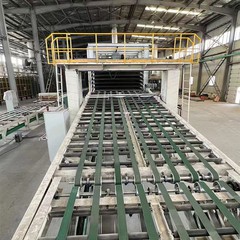
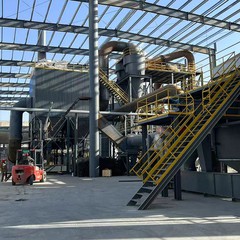
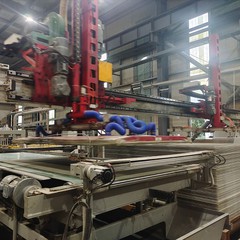
Our Automatic Paperless Gypsum Board Production Line is designed to efficiently process these raw materials into high - quality gypsum boards. The production line is equipped with advanced technology and automation systems that ensure precise control of the production process.
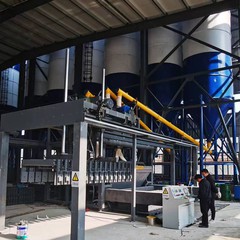
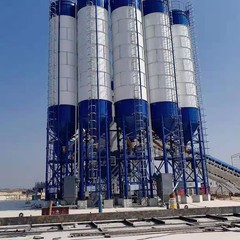
The line starts with the raw material storage and handling system, where the gypsum powder, additives, and water are stored and prepared for mixing. The mixing process is carefully controlled to ensure a uniform slurry. The slurry is then fed onto a conveyor belt, where it is formed into a continuous sheet. The sheet is then cut into the desired size and sent to the drying section.
In the drying section, the boards are dried using hot air or other drying methods. The drying process is optimized to ensure that the boards are dried evenly and efficiently. After drying, the boards are inspected for quality and packaged for shipment.
We also offer Semi - automatic Paperless Gypsum Board Production Line for customers who have different production requirements. These semi - automatic lines offer a balance between cost - effectiveness and production efficiency.
Conclusion
The raw materials used in an Automatic Paperless Gypsum Board Production Line play a crucial role in determining the quality and performance of the final product. By carefully selecting and using high - quality gypsum, additives, water, and other materials, we can produce gypsum boards that meet the highest standards in the construction industry.
If you are interested in our Automatic Paperless Gypsum Board Production Line or have any questions about the raw materials and the production process, please feel free to contact us for a detailed discussion and potential procurement. We are committed to providing you with the best solutions for your gypsum board production needs.
References
- "Gypsum Board Manufacturing: A Comprehensive Guide" - Industry Publication
- "Advanced Additives for Gypsum Products" - Research Journal
- "Waterproofing and Fire - Resistant Technologies in Gypsum Board Production" - Technical Report