

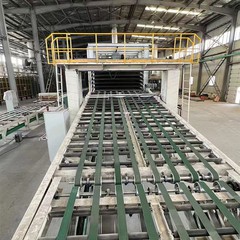
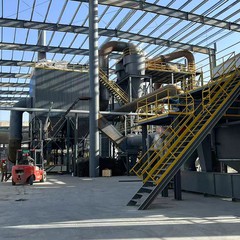
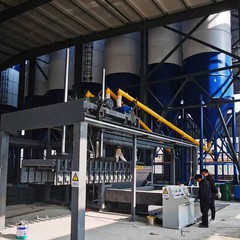
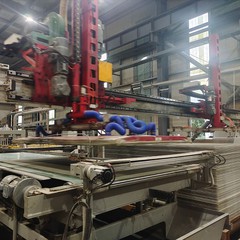
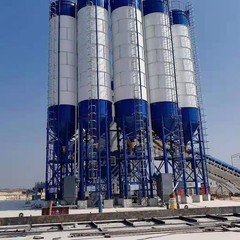



Hey there! As a supplier of the general calcium silicate board production line, I've seen my fair share of challenges and triumphs when it comes to turning out top-notch calcium silicate boards. Trust me, it's not just about pushing materials through the machine; it's a whole mix of science, tech, and good old know-how. So, let's dig into how we can boost the quality of those calcium silicate boards coming off a general production line.
Understanding the Basics
First things first, we gotta know what calcium silicate boards are all about. These boards are made from a bunch of stuff like lime, silica, and fibers. They're super versatile, used in construction for things like wall partitions, ceilings, and fireproofing. The quality of these boards depends on a bunch of factors, from the raw materials we use to how we run the production line.
Selecting Quality Raw Materials
You know the saying, "You can't make a silk purse out of a sow's ear"? Well, it's true for calcium silicate boards too. The quality of the raw materials is a big deal. For starters, we need high - purity lime and silica. The lime provides the calcium ions, and the silica gives the silicon dioxide. If these aren't up to snuff, the chemical reactions during production won't be right, and the end product will suffer.
When it comes to fibers, we've got a few options like wood pulp, cellulose fibers, or even synthetic fibers. Each has its pros and cons. Wood pulp is cheap and easy to get, but it might not be as strong as synthetic fibers. We need to pick the right fiber based on what the board is going to be used for. For example, if it's for a fire - resistant application, we might want to go with a more heat - resistant fiber.
Optimizing the Mixing Process
Once we've got our raw materials, it's time to mix them up. This is where the magic starts to happen. The mixing process has to be spot - on. We need to make sure all the ingredients are evenly distributed. If there are clumps or uneven parts, the board will have weak spots.
We also need to control the moisture content during mixing. Too much water, and the board might be too soft and take longer to dry. Too little, and the chemical reactions won't work properly. It's all about finding that sweet spot.
Advanced Production Line Technology
Now, let's talk about the production line itself. We've got some really cool options out there. For instance, the Intelligent Control Calcium Silicate Board Production Line. This baby uses sensors and smart tech to monitor and adjust the production process in real - time. It can detect things like temperature, pressure, and moisture levels and make changes automatically. That means we can keep the quality consistent and avoid human errors.
Then there's the Energy - saving Calcium Silicate Board Production Line. In today's world, energy is expensive, and we're all trying to be more eco - friendly. This production line is designed to use less energy without sacrificing quality. It does things like recycling heat and using energy - efficient motors.
The Full - automatic Calcium Silicate Board Production Line is another game - changer. It can handle everything from mixing to cutting and stacking with minimal human intervention. This not only speeds up the production process but also reduces the chances of mistakes.
And let's not forget the Eco - friendly Calcium Silicate Board Production Line. This line focuses on reducing waste and using sustainable materials. It's great for the environment and also for our customers who are looking for green building solutions.
Curing and Drying
After the boards are formed, they need to go through the curing and drying process. Curing is when the chemical reactions in the board are completed. It's important to control the temperature and humidity during this stage. If it's too hot or too dry, the board might crack. If it's too cold or too wet, the curing process will be slow, and the board might not reach its full strength.
Drying is also crucial. We need to make sure the board is completely dry before it's ready for use. A wet board can warp or develop mold. We can use different drying methods, like hot air drying or infrared drying. Each method has its own advantages, and we need to pick the one that works best for our production line.
Quality Control
Quality control is the backbone of producing high - quality calcium silicate boards. We need to have a strict testing regime in place. This can include things like testing the board's strength, density, and fire resistance. We can use tools like compression testers and fire chambers to get accurate results.


Inspecting the boards visually is also important. We need to look for any defects like cracks, bubbles, or uneven surfaces. If a board doesn't meet our quality standards, it shouldn't go out the door.
Staff Training and Maintenance
Even the best production line won't work well if the people running it don't know what they're doing. That's why staff training is so important. Our workers need to understand the production process, how to operate the machinery, and how to spot potential problems.
Regular maintenance of the production line is also crucial. We need to keep the machines clean, lubricated, and in good working order. A poorly maintained machine can lead to quality issues and even breakdowns.
Conclusion
Improving the quality of calcium silicate boards from a general production line is no easy task. It takes a combination of good raw materials, advanced technology, proper curing and drying, strict quality control, and well - trained staff. But if we get all these things right, we can produce boards that are strong, durable, and meet the needs of our customers.
If you're in the market for a calcium silicate board production line or looking to improve the quality of your current production, don't hesitate to reach out. We're here to help you take your calcium silicate board production to the next level.
References
- ASTM International. ASTM C1186 - 19e1 Standard Specification for Calcium Silicate Boards.
- Wu, X., & Zhang, Y. (2020). Research on the Improvement of Calcium Silicate Board Production Technology. Journal of Building Materials Science.