




Yo! As a supplier of gypsum powder production lines, I'm stoked to chat about the communication interfaces in these setups. Communication interfaces are like the unsung heroes in a gypsum powder production line. They're what keep everything in sync, making sure all the different components work together like a well - oiled machine.
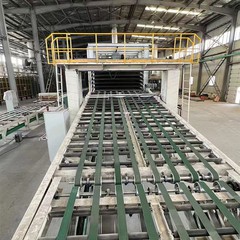
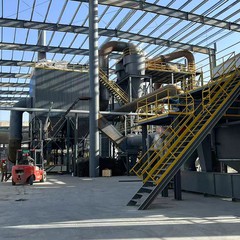
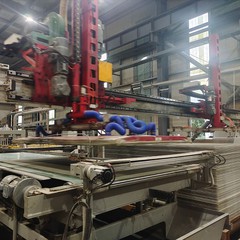
Let's start with the basics. In a modern gypsum powder production line, we've got a bunch of different machines and systems. There's the crusher that breaks down the raw gypsum, the mill that grinds it into powder, the calcination equipment that heats it up to the right temperature, and the packaging unit that gets the finished product ready for sale. And all these parts need to talk to each other.

One of the most common communication interfaces we use is the Modbus. It's a simple yet super reliable protocol. Modbus allows different devices in the production line, like sensors and controllers, to exchange data. For example, the temperature sensors in the calcination unit can send real - time data to the control panel using Modbus. The control panel can then adjust the heating elements accordingly to keep the temperature just right for gypsum powder production.
Why is Modbus so popular? Well, it's easy to implement. It doesn't require a lot of fancy hardware or complex programming. Most of the industrial devices we use in our Alpha Gypsum Powder Line are already compatible with Modbus. This means we can quickly set up the communication between different machines without a whole lot of hassle.
Another important interface is Profibus. It's a bit more advanced than Modbus, especially when it comes to high - speed data transfer. In a big - scale gypsum powder production line, like our Continuous Natural Gypsum Powder Production Line, there's a ton of data that needs to be exchanged in real - time. Profibus can handle this high - volume data flow efficiently.
Let me break it down a bit. In the grinding process, the sensors on the mill can measure things like the power consumption, the rotation speed, and the particle size of the gypsum powder. All this data needs to be sent to the central control system at a high speed so that any issues can be detected and addressed immediately. Profibus is great for this kind of situation. It can transfer data quickly and accurately, reducing the risk of production disruptions.
Then there's Ethernet/IP. This interface is all about integrating the production line with other networks. In today's connected world, it's important to be able to access the production data from anywhere. With Ethernet/IP, we can connect our gypsum powder production line to the company's internal network. This allows managers and technicians to monitor the production process remotely.
For instance, if you're using our Industrial Gypsum Powder Line, you can check the status of the production line from your office computer or even your smartphone. You can see if the machines are running smoothly, if there are any maintenance issues, and how much gypsum powder has been produced so far. This kind of connectivity is a game - changer in the industry.
Now, let's talk about the human - machine interface (HMI). This is the part where the operators interact with the production line. We use a touch - screen panel as the HMI in most of our production lines. It's really intuitive and easy to use. Operators can use the HMI to start and stop the machines, adjust the production parameters, and view the production data.
For example, in our Building Grade Desulfurized Gypsum Powder Production Line, the operator can use the HMI to set the desired particle size of the gypsum powder. The control system will then adjust the mill settings automatically to achieve the target. This simplifies the production process and reduces the chances of human error.
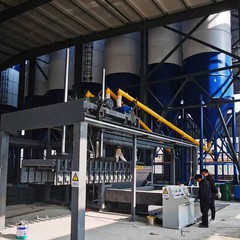
Lastly, we have the fieldbus systems. Fieldbus is a digital communication system that connects the field devices, such as sensors and actuators, to the control system. It provides a reliable and efficient way to transfer data between these devices. In our Industrial - grade Natural Gypsum Powder Production Line, we use fieldbus to connect all the different sensors in the production line, like the level sensors in the silos and the flow sensors in the conveyor belts.
By using fieldbus, we can ensure that all the field devices are communicating effectively with the control system. This improves the overall efficiency and reliability of the production line. If there's a problem with one of the sensors, the control system can detect it immediately and alert the operators.
To sum it up, communication interfaces play a crucial role in a gypsum powder production line. They keep everything connected, ensure smooth operation, and allow for remote monitoring and control. Whether it's the simple Modbus for basic data exchange, the high - speed Profibus for large - scale production, or the Ethernet/IP for network integration, each interface has its own unique advantages.
If you're in the market for a gypsum powder production line, you know how important it is to have a reliable communication system in place. We, as a supplier, have years of experience in setting up these interfaces and ensuring that they work seamlessly in our production lines. Don't hesitate to reach out if you're interested in learning more or if you're ready to start a partnership. We'd love to have a chat and see how we can meet your specific needs.
References
- Industrial Automation Handbook
- Gypsum Powder Production Technology Manual