




Gypsum Block Production Line
Automated Gypsum Block Production Line for High-Yield Commercial Manufacturing
A commercial gypsum block production line must do far more than run at high speed on paper. For manufacturers supplying building material distributors, wholesalers, and large-scale contractor network, long-term profitability depends on three real-world factors: dimensional accuracy across repeat runs, predictable daily output of saleable blocks, and tight control over drying energy costs.
Shineye delivers complete gypsum block production line solutions—from automated raw material dosing and continuous slurry mixing to precision forming, damage-free demolding, climate-controlled drying, and automated packaging. Rather than pushing standard off-the-shelf equipment, we configure each line around your specific block dimensions, target output, raw material characteristics, and factory footprint.
Whether your market demands solid partition blocks, weight-reducing hollow blocks, or precision tongue-and-groove joint profiles, our engineering ensures your plant outputs consistent, market-ready products batch after batch.


Gypsum Block Types And Market Configurations
Solid Gypsum Blocks Designed for interior non-load-bearing partition walls requiring high mechanical strength, solid mass, and sound insulation.
Hollow Gypsum Blocks Engineered to reduce unit block weight and raw material consumption without sacrificing structural integrity. Ideal for high-rise construction where dead load reduction is critical.
Precision Tongue-and-Groove (T&G) Profiles Interlocking profiles dramatically speed up wall installation on job sites. Because installers rely on tight joints to keep walls plumb, our molds are machined to microscopic tolerances to prevent joint misalignment and site rejections.
Standard & Custom Dimensions Standard European profiles commonly specify 666 × 500 mm faces with thicknesses ranging from 50 mm to 100 mm. We design custom mold cassettes to match your precise target dimensions and local building codes.

Gypsum Powder Quality Purity, calcination state, particle size distribution, and initial moisture dictate the water-to-gypsum ratio and hydration speed.
Water Quality & Ratio Excess water lowers block strength and skyrockets drying energy consumption. Insufficient water ruins slurry fluidity and creates air voids inside the block.
Functional Additives Set retarders, water reducers, and water-repellent agents (for H1/H2/H3 moisture-resistant block grades) must be dosed with extreme precision. A 1% error in additive dosing can ruin an entire batch.
End-To-End Process Architecture
In commercial plant operations, single-machine speed is a vanity metric. A fast mold machine is useless if your drying section creates a bottleneck downstream. Shineye engineers every plant stage as one balanced ecosystem:
Gypsum Powder Storage
Automated Dosing
Precision Mixing
Mold Filling & Air Extraction
Controlled Setting
Gentle Demolding
Accelerated Drying
QC Inspection
Automated Stacking & Strapping
Quality Control at Every Stage
|
QC Item |
Inspection Focus |
B2B Market Relevance |
|
Dimensions |
Length, height, and thickness |
Supports consistent on-site installation and helps minimize excessive joint material |
|
Edge Profile |
Tongue-and-groove alignment and profile accuracy |
Helps prevent wall offset and reduces installation-related complaints |
|
Surface Quality |
Surface cracks, voids, chips, and visible defects |
Affects finishing requirements and suitability for downstream painting or surface treatment |
|
Dry Density |
Weight per cubic meter |
Used to classify blocks by density and control product consistency |
|
Residual Moisture |
Final moisture content (%) after drying |
Helps control storage stability, transport weight, and risk of moisture-related problems |
|
Water Absorption |
Water absorption (%) according to the applicable test method |
Used to determine the applicable water-absorption class for products specified under EN 12859 (H1/H2/H3) |
Never evaluate a production line based solely on theoretical mold cycle times. True commercial capacity represents saleable blocks delivered to the warehouse floor.
When calculating your plant ROI, Shineye accounts for real operational variables:
● Cavity count per mold run
● Real setting time based on local gypsum purity
● Energy recovery in technical drying tunnels
● Planned maintenance windows and recipe changeovers
Capacity metric options for engineering proposals:
● Finished Blocks per Hour / Day
● Square Meters (m²) of Finished Wall per Day
● Annual Tonnage Output

Designed for Wholesalers and Distributors
Your end-customers—distributors and construction contractors—care about transport efficiency and batch consistency.
Uniform Pallet Loading Defined block counts per pallet allow distributors to accurately calculate truck load capacities, container packaging, and freight costs per square meter.
Protective Packaging Options Automated shrink-wrapping and edge-protector application shield shipments from rain, humidity, and rough handling during international shipping.
Batch-to-Batch Repeatability Stored digital PLC recipes guarantee that an order placed six months from now matches the exact dimensions, color, and density of today’s shipment.
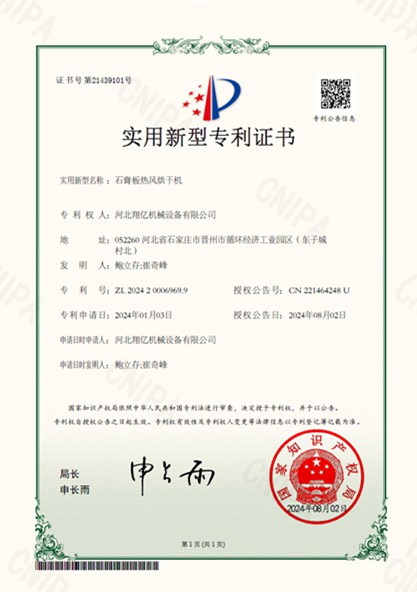
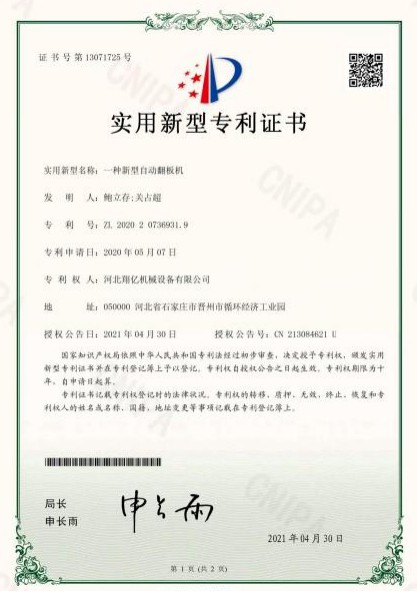
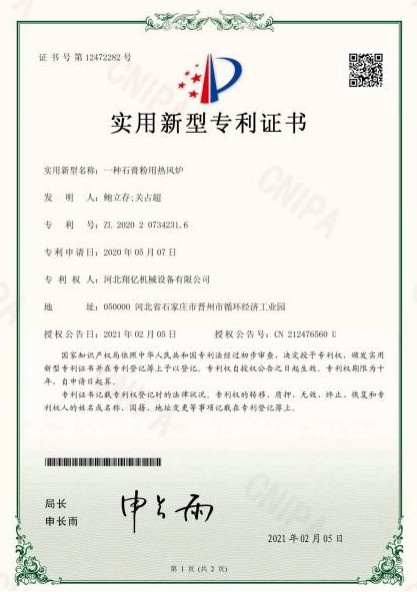
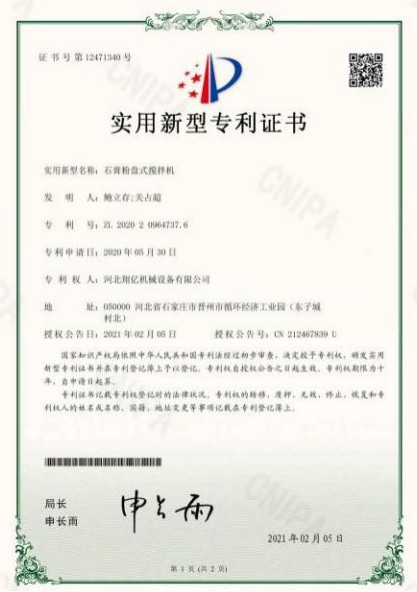
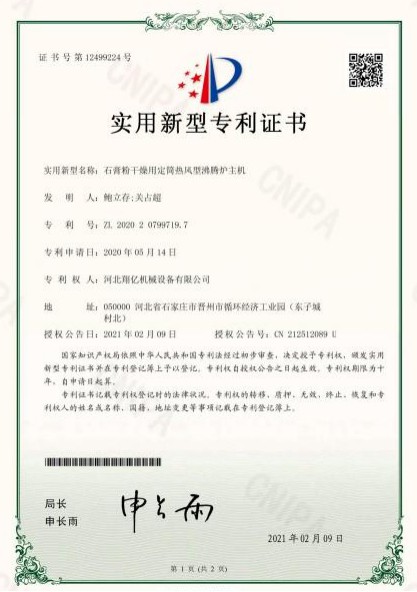
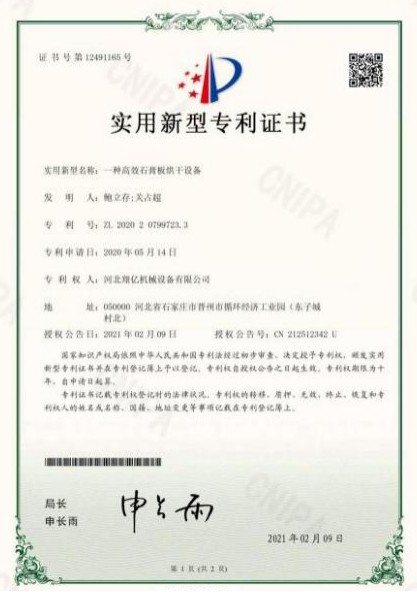
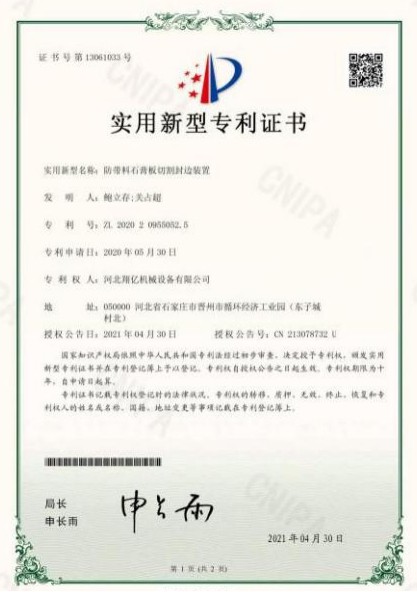
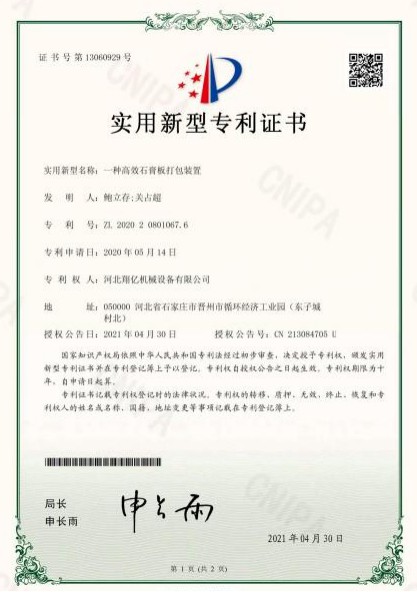
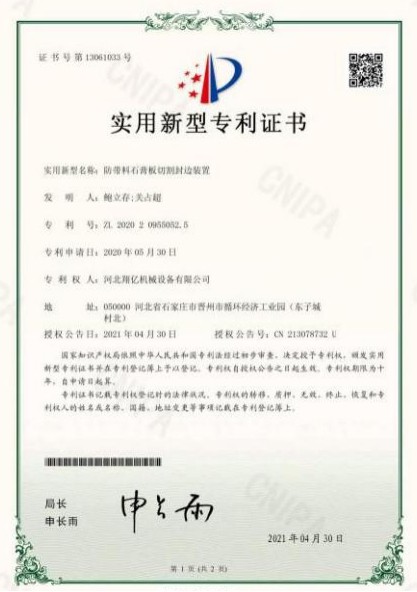
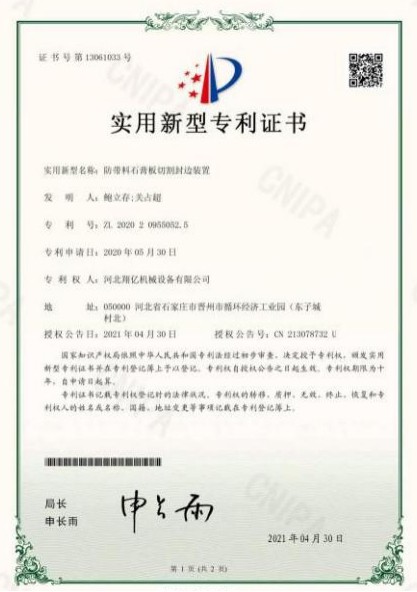
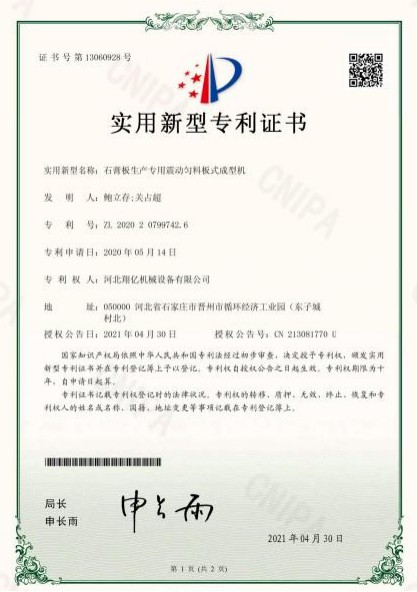
Our Certificate

FAQ
Shineye Mach Co., Ltd. is one of the most reliable manufacturers and suppliers of gypsum block production line in China, also supports customized service with reasonable price. Please feel free to buy advanced gypsum block production line made in China here from our factory. For quotation, contact us now.