

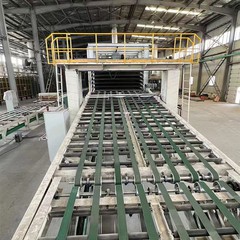
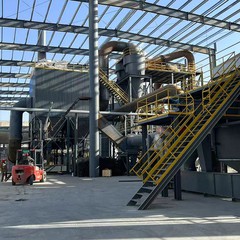
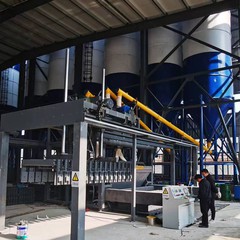
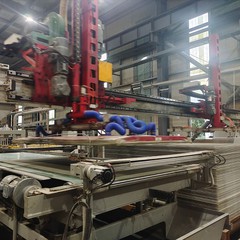
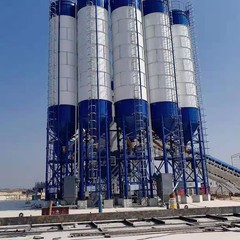





Shineye Mach Co., Ltd. is one of the leading manufacturers and suppliers of Gypsum Board Manufacturing Line in China. If you're going to buy the newest Gypsum Board Manufacturing Line made in China, welcome to get quotation from our factory. All customized products are with high quality and competitive price.
Gypsum Board Manufacturing Line: A Buyer's Guide
From Delayed Shipments to His Own Production
A building materials trader in Dar es Salaam was tired of watching his container-loads of plasterboard get delayed. Sixteen weeks. Then twenty. Eventually he stopped asking for quotes and called us with a different question: "What would it take to make the boards myself?" That call came on a Tuesday. By Friday we had a rough layout for a 3 million m² plant that fit his existing warehouse. Three months later, the first batch of 12 mm board came off the line. Within the first few months of operation, local contractors who had previously relied on imported boards began placing repeat orders because delivery times were measured in days instead of weeks. That's the whole point of this Gypsum Board Manufacturing Line: A Buyer's Guide - not just the equipment, but what it actually takes to stop depending on someone else's production schedule and start controlling your own supply.
We've been building these systems out of our own factory in Hebei for over 15 years. Every dryer panel, forming table, and control cabinet is made under our roof. When you call with a question five years after installation, the person who answers probably helped build your machine.
Why Build Your Own Plant?

Construction across emerging markets isn't slowing down. Wet plaster and brick walls are giving way to gypsum board because it installs faster, creates less mess, and performs better in a fire. The demand is already there. The real bottleneck isn't selling boards - it's making enough of them, at consistent quality, to keep buyers coming back.

If you're already in building materials, bringing production in-house changes your cost structure permanently. You stop negotiating container prices and absorbing shipping delays. You control output and delivery schedules. A 5 million m² line running three shifts can pay for itself within two years, provided your local board price is healthy and raw gypsum isn't excessively expensive. Send us your actual numbers and we'll calculate the payback for your specific market, not some industry average.

There's another advantage people rarely mention. When a developer needs 8,000 m² of 15 mm fire-rated board next week, the local producer who can switch his line on the fly wins the order. The importer waiting six weeks for a container loses it. Speed and flexibility often beat price.
What's This Going to Cost You?
No two plants cost the same. Anyone who quotes a price before understanding your site is guessing. Five factors really drive the final number.
01.Automation level
02.Dryer size and heat source
03.Capacity target
04.Raw material characteristics
05.Site conditions
A ready transformer, cured foundation, and reliable water supply mean you can start installation as soon as containers arrive. A greenfield site without power or with poor soil that needs piling adds civil works outside our equipment scope. We flag all of this early so your budget reflects the full picture.
Why Customers Choose Different Capacities
The customers who get this right on the first try don't choose capacity based on ambition. They choose based on how they source raw materials, how they sell finished boards, and how much risk they can manage while the market develops.

The 2 Million m² decision
This buyer is typically a trader or mid-sized contractor who already moves building materials. He knows exactly who his first 15 customers will be. What he doesn't know is whether local production quality will match imported board, how quickly contractors will switch, or whether his team can run a production line. So he starts small. A 2 million m² line keeps his investment manageable. If demand surges, he adds shifts and can double or triple output from the same equipment. Several of our customers started at 2 million and reached 4 million equivalent within 18 months just by adding shifts. The smaller line was insurance, not a limitation.
The 5 Million m² decision
This is the established distributor who already supplies two or three provinces. He isn't wondering whether he can sell gypsum board - he's already selling it, imported at thin margins. His trucks already deliver to the same hardware stores and contractor yards that buy board. A 5 million m² line balances output with manageable complexity. Payback falls in the 18-to-24-month range. The real advantage isn't the capacity figure; it's that the sales channel already exists. The day the first board comes off the line, a truck is waiting to take it to a customer who has been asking for local supply for years.


The 10 Million m² decision
This buyer isn't serving a single domestic market. He's thinking in container-load quantities heading to multiple countries. At this scale, the question shifts from "Can I sell this?" to "Can I produce cheaply enough to compete with established exporters?" The dryer becomes the centerpiece of the entire operation - a few points of thermal efficiency can swing the cost per square meter enough to win or lose a tender. This customer usually locks in a raw material strategy before ordering equipment. Without a raw material advantage at this scale, you're competing on someone else's terms.
The 20 Million m² decision
This is the industrial-scale operator running two parallel 10 million m² lines that share raw material handling and finished goods storage. The decision to go this big usually stems from a government housing program that demands guaranteed national supply, or a multi-country distribution network where import duties make local production the only way to defend market share. At this volume, a single-line shutdown costs real money, so redundancy is designed into the layout. These operators often integrate backward into gypsum calcination and paper sourcing, not because they want to be in those businesses, but because at 20 million m², supply chain disruption costs more than vertical integration.

Industries We Serve
Running your own line means supplying entire supply chains. Here's who will buy from you and what they'll expect.
Property developers are your volume buyers. They need standard 9 mm and 12 mm board for residential ceilings and partition walls across multiple projects simultaneously. They care about two things: consistent quality and on-time delivery. When you own production, you become the supplier who never misses a deadline because you control the schedule.
01
Building material distributors are your channel to the wider market. They stock multiple sizes and want a single supplier who can deliver mixed loads - 9 mm for ceilings, 12 mm for walls, 15 mm for commercial jobs - on one truck from one factory. Your own line lets you offer a full catalog without relying on multiple import sources.
02
Building material factories sometimes don't sell finished board at all. They make board as a component for prefabricated wall panels, modular housing units, or ceiling tile systems. These buyers need specific densities, tighter tolerances, and custom lengths that importers can't supply reliably.
03
Government and public projects - schools, hospitals, public housing - often specify fire-rated board, moisture-resistant board, and locally manufactured content. Your own line gives you the technical specs to bid and the "locally made" credentials that can tip a tender decision.
04
Hotels and commercial fit-outs move fast once construction starts. They need 15 mm fire-rated board for stairwells and shaft walls, plus moisture-resistant board for bathrooms and kitchens. The contractor on site won't wait for a container. The local producer with stock on hand gets the call.
05
Don't Even Think About Ordering Until You've Got These Sorted
Skip any one of these and a smooth installation turns into a stalled project.
You need a level industrial plot with clear title and access for heavy trucks. The building must be sized around the dryer, not the forming section. For 5 million m², figure 1,500 to 3,000 m² under cover, plus separate storage for raw materials and finished goods. The foundation must be reinforced concrete, poured and fully cured before our team arrives. We provide detailed drawings and won't ship until we see photos of the prepared pads.
Drying consumes more energy than all other processes combined. You need a confirmed fuel supply - pipeline natural gas, bulk LPG storage, a coal yard, or fuel oil tanks - with enough capacity to run continuously. If you're connecting to a gas grid, verify the pipeline pressure and daily delivery volume with the utility before signing an equipment order.
Installed power ranges from 100 to 800 kW. You need a dedicated transformer sized for the load plus a 20% margin. If your grid fluctuates beyond ±10%, we add an isolation transformer and wide-input power supply to protect the control system. Check transformer lead times early - utility delays have stalled more projects than equipment manufacturing ever has.
Production consumes 5 to 10 m³ per hour, non-stop. Water quality directly affects slurry consistency: hard water alters setting time, and iron can discolor boards. Test your water source early. Installing a softener before commissioning is cheap compared to fixing reject boards later.
The structure must accommodate dryer exhaust ventilation, overhead crane beams for maintenance, and proper drainage for wash-down areas. The dryer's length dictates the building's minimum length. We'll work with your architect or builder and do a remote video walk-through before containers ship to catch layout mismatches.
Here's What Most Quotations Leave Out
The equipment price is only part of your total investment. Before you sign, verify these five areas - they've burned more project budgets than any machine price tag.
-
Civil works – reinforced concrete pads for the dryer, forming table, and batching tower; piling costs fall on you if soil conditions require them.
-
Transformer – confirm availability and lead time early; a missing transformer on installation day means our crew waits and you still incur costs.
-
Water treatment – if your water chemistry demands a softener or filter, procure it alongside the main line so it's ready at commissioning.
-
Environmental permits – we provide emissions data and dust-control specifications, but the approval timeline is your responsibility. Start early.
-
Transport access – dryer sections can measure 12 m long × 3.5 m high; check the route from the port for low bridges or tight turns.

What This Line Delivers - And Why Each Choice Matters
The whole system converts raw gypsum powder into stacked, wrapped boards with minimal human intervention. One operator monitors everything from a Siemens PLC console - slurry density, line speed, all six dryer zone temperatures, cutting length, and thickness readings. We use Siemens not for the name, but because any industrial electrician in Lagos, Lahore, or Lima can source a replacement module locally within hours. Proprietary control systems may look impressive in a brochure, but they mean weeks of downtime when a component fails.
Thickness adjusts on the fly from 7 mm to 15 mm. Width is fixed at 1,200 mm or 1,220 mm. Length cuts to any dimension between 1,800 mm and 3,600 mm. Laser sensors placed every 50 mm check thickness across the full board surface. Boards outside ±0.2 mm tolerance are automatically diverted before reaching the stacker. Manual checks catch problems after you've already produced a pallet of rejected board. Automatic diversion catches a single bad board and removes it without stopping production.
The six-zone dryer is the single biggest energy consumer in your plant. Layered top-and-bottom control pushes thermal efficiency past 85%. The heat recovery system reclaims 8 to 12% of exhaust air to pre-heat incoming air. Every percentage point of efficiency gained or lost translates directly to your operating cost per square meter. That's why we design the dryer around your specific fuel source - coal, gas, LPG, or fuel oil - and size the burner for what you can actually secure at a stable price.
At the exit, dry boards pass through edge trimmers and proceed to automatic stacking and stretch wrapping. Changeover from standard to fire-rated board happens through the batching software without mechanical adjustments. One order of 9 mm standard board finishes; the next order of 15 mm fire-rated board begins, and the line never stops.
Now, if you've made it this far into this buyer's guide, you'll notice we haven't buried you in glossy brochure talk. Instead, we've focused on the numbers and decisions that actually determine whether a plant makes money. Below you'll find the full technical specifications - every parameter that matters for daily operation.
Technical Specifications
| Parameter | Specification |
|---|---|
| Annual capacity | 2 – 30 million m²/year |
| Board thickness | 7 – 15 mm |
| Board width | 1,200 mm / 1,220 mm |
| Dryer zones | 6 independent, layered temperature control |
| Thermal efficiency | ≥85% |
| Installed power | 100 – 800 kW |
| Labor | 10 – 15 operators per shift |
| Control system | Siemens PLC with HMI |
| Heat source | Coal, natural gas, LPG, fuel oil |
| Service life | 15 – 20 years with routine maintenance |
| Warranty | 12 months |
| Installation period | 4 – 8 weeks + 2 – 4 weeks commissioning |
Why These Numbers Matter

Spec sheets can look identical after you've read enough of them. What counts is what each figure means for daily operation and long-term costs.
A wide capacity range lets you start small and grow without redesigning the entire process. Thermal efficiency above 85% is what operators see on the HMI during three-shift production; every point below that threshold is fuel you paid for but didn't use. Installed power of 100 to 800 kW means your transformer sizing depends on your specific dryer configuration, not a generic figure. Labor at 10 to 15 operators per shift assumes your team is trained by our engineers during commissioning; most plants reduce headcount further after six months of hands-on experience. The 12-month warranty covers manufacturing defects, while the 15-to-20-year service life indicates what to expect with proper maintenance.
Common Production Problems - And What Actually Fixes Them
Every plant encounters problems. Here are five issues we've seen across installed lines, along with practical solutions.
How to avoid board cracking. Cracking usually traces to three causes: the surface dried too fast while the core stayed wet, too little water in the slurry, or uneven paper tension. If cracks appear near the edges, back the first zone temperature down by 10 to 15°C. If cracks run through the middle, check the water-to-powder ratio - we typically see cracking when it drops below 0.65 on natural gypsum. Also verify paper unwind tension on both rolls.
How to reduce drying costs. First, check your heat recovery. If exhaust air leaves the dryer above 120°C and you're not running it through a heat exchanger, you're throwing away 8 to 12% of your fuel. Second, review zone temperatures. Drop zones three and four by 5°C and measure the moisture at the exit. Third, board thickness matters. If your market accepts 9 mm board for ceilings, switching from 12 mm cuts drying fuel by roughly 15%.
How to improve board strength. Soft edges usually mean too much water. Tighten the water-to-powder ratio in small increments. Adding 0.5 to 1% starch by weight improves both edge hardness and paper bond, but test incrementally. Also check set time: too fast, crystals don't grow fully; too slow, the board is soft when it hits the knife.
How to reduce rejected boards. At forming, check the plate for dried slurry buildup - a five-minute clean between runs solves most thickness variation. At cutting, re-zero the rotary knife encoder weekly. At drying, if one side warps, adjust the top or bottom zone temperature by 5°C - not both at once.
How to increase capacity without a second line. Max out your shifts first. If already on three shifts, switch to thinner boards where possible. Finally, run a controlled line speed test: increase by 2%, check moisture, repeat until you find the real ceiling. Most plants can squeeze 5 to 10% more throughput just by tuning.
Who We Are
We're Xiangyi Machinery, operating from our own factory in Jinzhou City, Hebei Province - not a rented office, but a working plant where we weld dryer panels, machine forming tables, and wire control cabinets. Our team includes mechanical engineers who've spent years designing dryer airflow, electrical engineers who write and debug PLC logic, and field technicians who've installed lines in Inner Mongolia winters and Pakistan summers. We've been at this since 2010, and our first major installation is still producing on its original core equipment.

Case Studies
Pakistan - Why He Chose Us After Talking to Three Suppliers
This owner had spent a decade importing gypsum boards from the Middle East. His warehousing network was strong, but every shipment brought the same problems: six to eight weeks of lead time, unpredictable damage, and margins squeezed by freight costs. By 2022, he held signed contracts with regional hardware chains but couldn't guarantee delivery dates.
He shortlisted three manufacturers. One quoted a lower price but couldn't provide references for lines still running after five years. Another outsourced installation to third parties. When he visited our factory in Hebei, he saw his dryer panels being welded and his control cabinet being wired. He met the engineer who would lead his installation. He spoke directly with a customer who had been running our equipment for over a decade. That visit sealed his decision.
We installed a 5 million m² fully automatic line near Lahore in 2023. Running three shifts from day one, he recovered his full investment in 14 months. By 2025, he ordered a second 6 million m² line. Combined capacity: 11 million m².
"I saw my equipment being built, met the engineer who'd install it, and talked to a customer who'd been running the same line since 2010. The other two suppliers couldn't offer any of that."
Inner Mongolia - The Supplier He Still Calls After 15 Years
The owner was a coal trader with gypsum reserves nearby. He had raw materials and market access but no manufacturing experience. His biggest concern wasn't price - it was whether the supplier would still answer the phone five years later.
The deciding factor: our team proposed adjusting the setting belt length and dryer temperature curve to match his local gypsum's slower setting time. The other supplier quoted a standard configuration and told him the gypsum would "probably be fine." He didn't want "probably."
The plant started in 2010. Fifteen years later, the same dryer, forming table, and mixer produce board daily. We later retrofitted a heat recovery system that improved his dryer efficiency from 84% to 87%.
"When my dryer efficiency started creeping down, they diagnosed it remotely: fan blade erosion on zone four. Replacement blades shipped the same week."
Southeast Asia - How One Lab Test Changed the Whole Project
A coal-fired power station had been paying to dispose of its FGD gypsum. A local entrepreneur saw the opportunity: turn someone else's disposal problem into his raw material advantage. Every consultant told him 100% FGD wouldn't work without blending in natural gypsum. Blending meant importing, which defeated the purpose.
We asked for a sample instead. Our lab tested his FGD gypsum and found it entirely viable as a standalone feedstock - it just needed an online moisture analyzer and dryer curves tuned for the faster setting time. The 5 million m² line was commissioned in 2026, running on 100% FGD gypsum. The power plant eliminated disposal costs; the board manufacturer secured a raw material cost competitors can't match.
"Every consultant said I'd need to blend. Your lab tested my actual material and built the recipe around it. We haven't blended a single ton."
Installation, Training, and Long-Term Support

Installation is handled entirely by our own engineers - never subcontractors. We stay on your site until your team can run the line independently. Every line ships with a 12-month warranty covering manufacturing defects. Spare parts typically ship within a week of request. Customers who installed in 2018 still call for parts and receive them the same week. Long after the warranty expires, we continue answering technical questions and advising on fuel switching or capacity expansion.
Frequently Asked Questions
How does this line compare with semi-automatic? A fully automatic line runs with 10 to 15 people per shift versus 20 to 25. Laser sensors hold thickness to ±0.2 mm. Dryer efficiency savings alone can reach USD 50,000 to 80,000 per year on a 5 million m² line. Most three-shift operations recover the automation premium within two years.
Can I expand later? Yes. Most 5 million m² plants can add a second forming section and extend the dryer tunnel. The PLC supports adding modules without replacing the entire system. Our Lahore customer expanded from 5 million to 11 million m².
How long from container arrival to first board? Four to eight weeks mechanical installation, plus two to four weeks commissioning - about eight to twelve weeks total. Delays almost always originate on the site side: uncured foundations, missing transformers, or unconnected water lines.
Can I switch board sizes mid-shift? Yes. Thickness adjusts on the fly from 7 mm to 15 mm via the HMI. Length is a digital setting. Many plants produce two or three different lengths in a single shift with zero mechanical changeover.
What gypsum purity do I need? At least 85% for standard board, 90%+ for fire or moisture-resistant. Consistency matters more than the absolute number. We test your sample and build the recipe around it.
What mistakes do first-time investors usually make? Signing before the site is ready. Choosing capacity based on ambition rather than confirmed orders - a 2 million m² line on three shifts generates cash; a 10 million m² line on one shift burns it. Assuming all gypsum is the same without testing. Ship us a sample early.
Can I use local paper suppliers? Possibly, but test first. Facing paper isn't just about weight - tensile strength, porosity, and fiber behavior matter. Send us a roll of what you plan to use. We'll test bonding with your gypsum sample before you commit.
How much warehouse space should I reserve? Finished boards need 800 to 1,500 m² for a 5 million m² line. Budget for seasonal demand swings. Raw material storage needs dry conditions - paper that absorbs moisture before forming causes wrinkles and blistering. Plan for at least 30 days of raw material storage at full production.
What should I prepare before your engineers arrive? A fully cured foundation. A tested transformer delivering stable voltage. A water supply flow-tested at full production volume. A commissioned fuel supply. Your operator team assembled for the full training period.
How do I know if my local gypsum will work? Send us a 5-kilogram sample. We test purity, free moisture, setting time, and water demand. Testing takes about a week. Several customers have switched sources after their first year; having a baseline makes those transitions faster.
Receive Your Factory ROI Report
Owning your own production line puts quality, cost, and delivery timelines in your hands. Tell us your target capacity, gypsum source, available fuel, and planned shift schedule. We'll work through the numbers with you and send back a customized payback projection based on your actual local costs - gypsum price, fuel price, board selling price. Not industry averages. Your numbers, your market, your timeline. Within 48 hours, you'll receive a preliminary layout drawing and a site-specific ROI report.
Our address
North of Dongzicheng Village, Circular Economy Industrial Zone, Jinzhou City, Hebei Province, China
Phone Number
+86 18132648037
xiangyijixielucia@yeah.net
Contact: Jessica Li | Response time: Within 24 hours on business days. Gypsum sample testing available upon request.
