

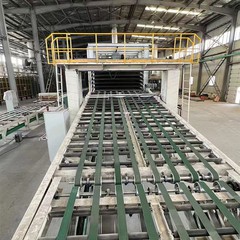
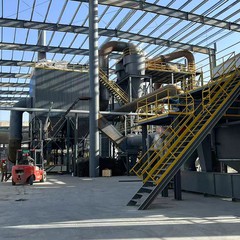
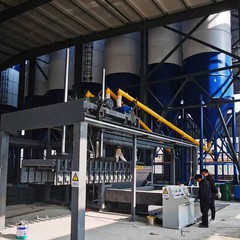
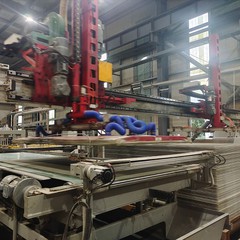
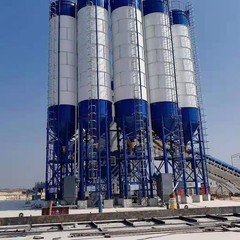





Shineye Mach Co., Ltd. is one of the leading manufacturers and suppliers of Paper Faced Gypsum Board Production Line in China. If you're going to buy the newest Paper Faced Gypsum Board Production Line made in China, welcome to get quotation from our factory. All customized products are with high quality and competitive price.
Paper Faced Gypsum Board Production Line

Product Positioning
This production line is a complete industrial-grade gypsum board manufacturing system that transforms calcined gypsum powder, water, and additives into finished panels through a fully automated, continuous workflow. The system is centrally controlled by PLC and engineered for stable, high-precision output with minimal manual intervention.
Whether you are setting up a new plant or upgrading existing facilities, this Paper Faced Gypsum Board Production Line is designed to deliver reliable output shift after shift, accommodating both medium-sized regional producers and large-scale industrial operations.
Application Scenarios
Paper faced gypsum board is widely used as an interior finishing material in modern construction. Its structure consists of a gypsum core sandwiched between two layers of high-strength paper, offering lightweight characteristics, fire resistance, sound insulation, and a smooth surface.
.Compared to traditional plastering or masonry walls, gypsum board improves construction speed, reduces labor costs, and simplifies on-site management. With the growing trend toward green buildings and prefabricated interiors, this material---due to its recyclability and low environmental impact---is becoming a common choice for interior wall and ceiling systems.


Comparison with Traditional Wall Materials
|
Property |
Gypsum Board |
Brick |
Cement Board |
Plywood |
|
Weight |
Light |
Heavy |
Medium |
Light |
|
Installation Speed |
Fast |
Slow |
Medium |
Fast |
|
Fire Safety |
Excellent |
Excellent |
Excellent |
Poor |
|
Sound Insulation |
Good |
Excellent |
Good |
Fair |
|
Overall Cost |
Low |
High |
Medium |
Medium |
|
For high-rise buildings, the lightweight nature of gypsum board reduces structural loads. For tight schedules, drywall installation is significantly faster than masonry. |
Technical Specifications
| Parameter | Specification |
|---|---|
| Annual Production Capacity (for this gypsum board manufacturing line) | 2 – 80 million m² |
| Board Thickness | 7 – 25 mm |
| Board Width | 1200 – 1220 mm |
| Board Length | 1500 – 3000 mm |
| Line Speed | 0 – 120 m/min |
| Drying Method | Hot air / Coal / Natural gas |
| Control System | PLC automatic control with central control room |
| Installed Power | Customized based on capacity |
| Required Workers | Varies by automation level |
| Warranty | 12 months |
Drying method selection: Thermal oil radiation offers stable temperature control and is suitable for high-capacity continuous operation. Hot air drying provides faster heat-up response and is often more economical for medium-capacity lines. The choice depends on your local fuel costs, environmental permits, and production scale requirements.
Note: Specifications above are for reference. Actual configurations can be customized based on raw material properties, site conditions, and production targets.
Production Capacity Selection Guide
Choosing the right production capacity is a critical investment decision. Below is a general reference:
| Capacity Range | Recommended For | Key Considerations |
|---|---|---|
|
2 -- 5 million m²/yr |
Regional suppliers, small-scale builders |
Lower initial investment, single-shift operation, faster payback |
|
5 -- 10 million m²/yr |
Growing manufacturers, multi-region supply |
Balanced cost and output, supports two-shift operation |
|
10 -- 20 million m²/yr |
Export-oriented factories, large contractors |
Competitive per-unit cost, suitable for three-shift operation |
|
20 -- 80 million m²/yr |
Large industrial groups, multinational supply |
Improved efficiency at scale, requires established market demand |
How to choose: Estimate your target market size and growth rate. If supplying a single city or region, 2--5 million m² often suffices. For exports or multiple provinces, consider 10 million m² or more. Also factor in available floor space, power supply, and local labor costs.
Common pitfall to avoid: Under-sizing the drying system is one of the frequent mistakes we observe. Many customers focus on forming capacity but overlook that drying is often the bottleneck. We recommend adding at least 15--20% buffer to drying capacity during the planning stage.
Process Flow Overview

Production Sequence:
Metering & mixing → Forming with paper facing → Setting → Cutting to length → Multi-zone drying → Trimming → Online inspection → Automatic stacking & wrapping.
All stages run under PLC control from a central console. One operator monitors the full sequence. The drying stage is typically the throughput constraint---plan extra capacity there during design.
Key Advantages
The PLC-based control system handles routine operations automatically, allowing the same number of workers to manage higher output compared to semi-automatic setups. This frees operators to focus on quality monitoring rather than repetitive manual tasks.
Switching between standard and specialty boards is a recipe adjustment, not a line reconfiguration. The same equipment handles moisture-resistant, fire-resistant, and high-strength formulations, enabling response to shifting market demand without additional capital expenditure.

The drying section accounts for the bulk of energy consumption, so the design effort focuses there. Optimized air circulation and heat recovery options help reduce fuel use per board, with configuration choices available for facilities where energy costs are a primary concern.
Switching between standard and specialty boards is a recipe adjustment, not a line reconfiguration. The same equipment handles moisture-resistant, fire-resistant, and high-strength formulations, enabling response to shifting market demand without additional capital expenditure.
Selected Project References
We have delivered lines across Asia, the Middle East, and beyond. Here is a sample of what we have done:
| Year | Country | Capacity | Project Details |
|---|---|---|---|
| 2003 | Pakistan | 6 million m²/year | First overseas delivery; line remains operational |
| 2007 | Bangladesh | 5 million m²/year |
Complete system with drying section commissioned |
| 2008 | India | 8 million m²/year | Second installation for a major industry group |
| 2009 | Indonesia | 5 million m²/year | Turnkey scope: supply, install, train |
| 2010 | Uzbekistan | 8 million m²/year | One of the largest installations in Central Asia |
| 2026 | Pakistan | 5 million m²/year | Recent Middle East deployment |
Company Profile

Hebei Xiangyi Mechanical Co., Ltd. has specialized in building material production equipment since 2002. Our product range includes gypsum powder production lines, calcium silicate board lines, and fiber cement board lines.
Our engineering team handles design, manufacturing, shipping, installation, commissioning, and operator training. We support our equipment with a 12-month warranty and responsive spare parts service. For a detailed engineering reference covering capacity planning, dryer sizing, and performance benchmarks, see our [Automatic Gypsum Board Production Line engineering guide].
Frequently Asked Questions
Q1: What exactly does this equipment produce?
This line manufactures paper faced gypsum board---the standard drywall used for interior walls and ceilings in residential and commercial buildings. For specific application examples, see Section 2.
Q2: How does the production process work?
Gypsum powder, water, and additives are mixed into slurry, formed onto a moving belt with paper facings, hardened, cut to length, dried in a multi-zone kiln, then trimmed, inspected, and stacked automatically. All controlled from a central PLC room.
Q3: How does gypsum board compare to traditional materials?
Gypsum board is lighter than brick (about one-third the weight), installs faster (days vs. weeks), and offers better fire resistance than plywood. See Section 3 for a side-by-side comparison.
Q4: How do I choose the right capacity for a Paper Faced Gypsum Board Production Line?
Match capacity to your sales pipeline---not just a target number. For new markets, start at 2--5 million m². For confirmed orders, scale higher. The dryer is often the bottleneck; allow 15--20% extra margin. See Section 5 for tier details.
Contact Us
For a tailored solution and quotation for your specific project, please contact:
Jessica Li
Our address
North of Dongzicheng Village, Circular Economy Industrial Zone, Jinzhou City, Hebei Province, China
Phone Number
+86 18132648037
+86 18132648037
