

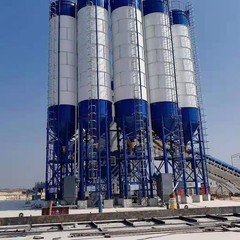



Calcium Silicate Board Production Line
Automated Calcium Silicate Board Production Line: Turnkey Engineering for Commercial High-Yield Manufacturing
A commercial calcium silicate board production line must deliver far more than continuous sheet forming. For building material manufacturers supplying global distributors, wholesalers, and EPC contractors, long-term market competitiveness depends on three operational fundamentals: precise dimensional and density control across batch runs, zero structural delamination, and strict minimization of thermal and electrical energy consumption per square meter.
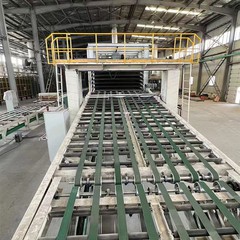
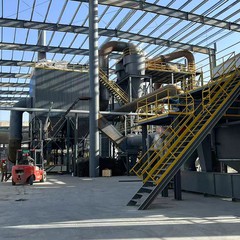
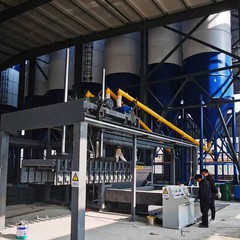
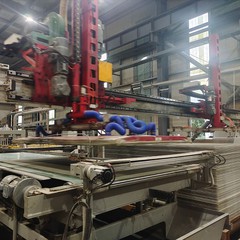
Shineye delivers end-to-end calcium silicate board production solutions—integrating raw material beneficiation and wet grinding, automated loss-in-weight dosing, slurry conditioning, Hatschek / Flow-on sheet forming, vacuum dewatering, multi-daylight hydraulic pressing, pre-curing, high-pressure steam autoclaving, drying, surface calibration, precision cutting, and automated palletizing into a fully synchronized ecosystem.
Rather than forcing standard off-the-shelf machinery onto unique local feedstocks, we engineer each line around your target board density (0.8–1.7 g/cm³), required annual output (2 million to 10+ million m²), local silica/lime purity, and preferred automation footprint.


Commercial Applications & Board Classifications
Shineye production systems can be customized to manufacture the full spectrum of commercial board grades:


Medium-Density Boards (0.8–1.2 g/cm³)
Engineered primarily for interior partitions, acoustic ceilings, and fireproof wall assemblies. Features high workability, easy screw-holding capability, and excellent thermal insulation.
High-Density Heavy-Duty Boards (1.2–1.7 g/cm³)
Formulated for high-impact exterior wall cladding, tunnel lining, and wet-area partitioning. Possesses superior flexural strength, ultra-low water absorption, and freeze-thaw durability compliant with international building codes.
Non-Asbestos Fiber-Reinforced Boards
Fully compliant with environmental safety directives, replacing hazardous mineral fibers with refined cellulose pulp, alkali-resistant glass fiber, or synthetic micro-fibers for structural integrity.
Standard & Custom Dimensions
Designed to support standard regional panels—including 1220 × 2440 mm, 1200 × 2400 mm, and 610 × 1220 mm—with thickness capabilities adjustable from 4 mm ultra-thin ceiling panels up to 30 mm heavy structural boards.
Testing Before Machinery Quotations
We analyze silica sand, quartz tailings, or fly ash for SiO₂ purity, iron contamination, and particle size distribution. Quartz sand must be wet-ground to a fineness of ≤ 8% residue on a 200-mesh sieve (74 µm) to guarantee complete hydrothermal synthesis during autoclaving.
Quicklime and cement provide the reactive calcium source. We measure slaking speed, temperature rise curves, and residual unburned limestone to prevent unreacted free-lime pockets that cause post-installation board cracking.
Cellulose pulp must undergo controlled mechanical refining (freeness measured at 20–35°SR) to optimize fiber fibrillation. Proper fiber bonding holds the wet slurry matrix together during vacuum dewatering and pressing.
Recycled slurry water is tested for dissolved salts, pH levels, and suspended solids to prevent premature slurry flocculation or chemical interference during hydro-thermal curing.

Evaluating individual forming machines in isolation is a trap for plant investors. A high-speed sheet-forming system is useless if your autoclave capacity or drying line creates a bottleneck downstream. Shineye synchronizes every stage of the manufacturing sequence:
Raw Material Grinding → Automated Dosing → Slurry Agitation → Sheet Forming (Hatschek/Flow-on) → Vacuum Dewatering → Stack Accumulation → Hydraulic Pressing → Pre-Curing Tunnel → Demolding & Vacuum Stacking → Autoclave Curing → Continuous Drying → Surface Sanding & Trimming → Quality Control → Automated Strapping
Quality Control Matrix & International Standards
|
Inspection Item |
Technical Testing Focus |
Commercial & B2B Relevance |
|
Dimensions |
Length, width, and squareness |
Helps prevent joint misalignment and reduces installation delays on the job site |
|
Thickness |
Multi-point thickness measurement and tolerance |
Supports uniform fitting in specified wall, ceiling, and framing systems |
|
Dry Density |
Oven-dry mass per unit volume |
Provides a basis for product classification and helps control weight and insulation-related performance |
|
Flexural Strength |
Modulus of Rupture (MOR) under applicable wet/dry conditions |
Indicates the board's resistance to bending, handling loads, and service-related stresses |
|
Moisture Content |
Final residual moisture (%) |
Helps control shipment weight, storage stability, and moisture-related deterioration |
|
Water Absorption |
Water uptake after the applicable immersion test |
Provides data for evaluating suitability in humid or moisture-exposed applications |
|
Moisture Movement |
Linear dimensional change under specified moisture conditions |
Helps assess dimensional stability and reduce the risk of movement-related joint problems after installation |
|
Non-Combustibility |
Fire-response testing according to the applicable standard |
Supports fire-performance classification where the product has been tested and certified to the relevant requirements |
Applicable International Product Standards
ASTM C1185 / ASTM C1288
Standard test methods for discrete non-asbestos fiber-cement flat sheets, evaluating flexural strength, density, water absorption, and moisture movement.
EN 12467
European standard for fiber-cement flat sheets, specifying categorizations (Category A, B, C, D) based on weather resistance, flexural strength classes (Class 1 to 5), and dimensional tolerances.
ISO 8336
International specifications for fiber-cement flat sheets used in interior and exterior construction assemblies.
Logistics, Packaging & Wholesale Distribution Design
Heavy-Duty Export Palletizing
Boards are stacked on custom solid-timber or fumigated composite pallets, fitted with plastic corner guards, wrapped in moisture-barrier stretch film, and bound with high-tensile PET strapping.
Container Loading Optimization
Pallet dimensions are pre-calculated against 20ft and 40ft High Cube container footprints to maximize tonnage without exceeding regional road transport weight limits.
Recipe Memory for Repeat Shipments
Stored digital PLC production logs ensure that an order manufactured two years from now matches the exact color, density, and thickness tolerance of today's delivery.
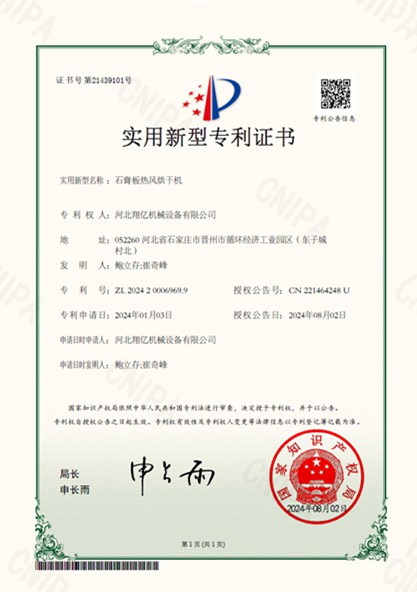
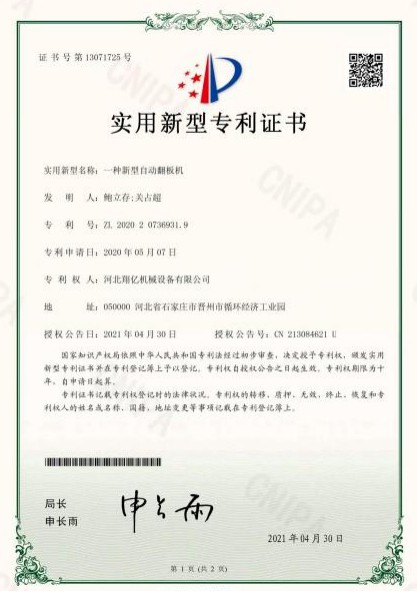
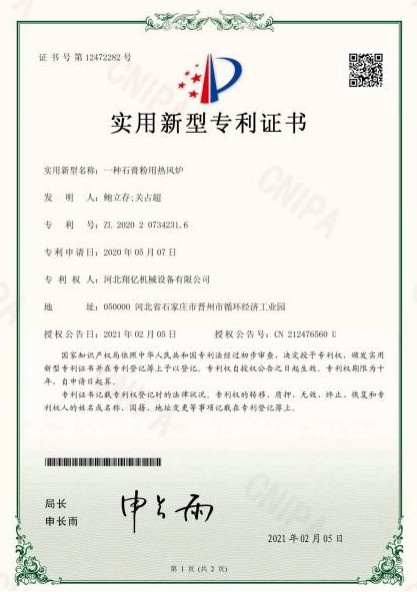
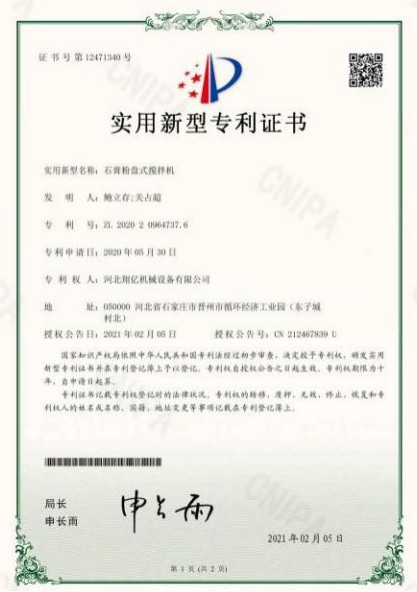
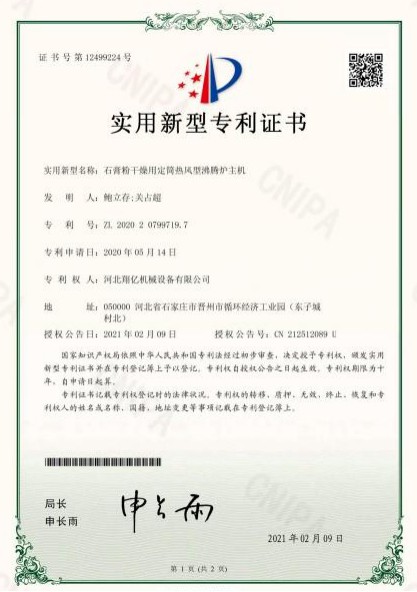
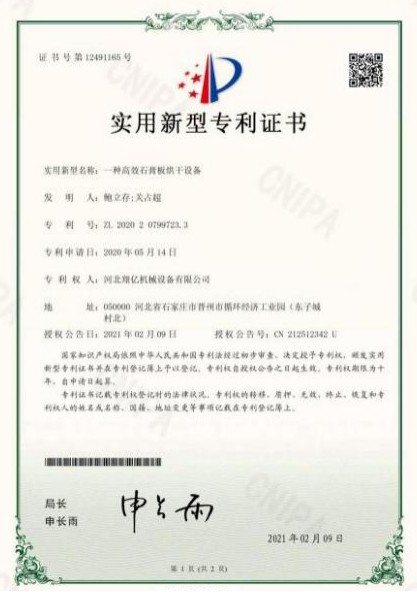
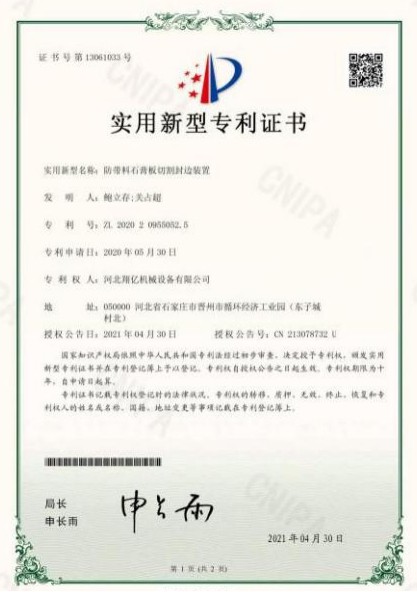
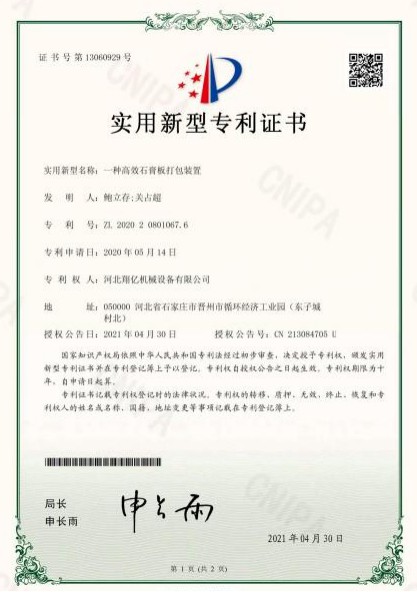
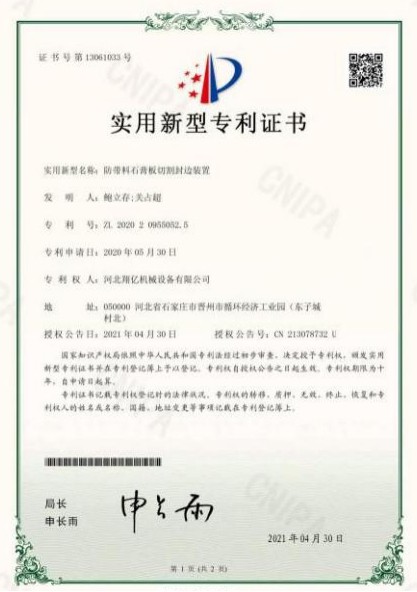
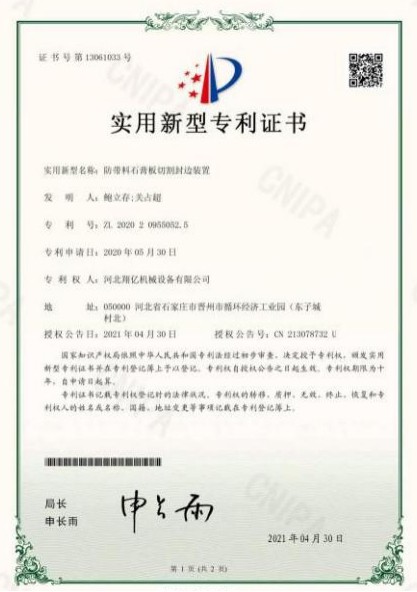
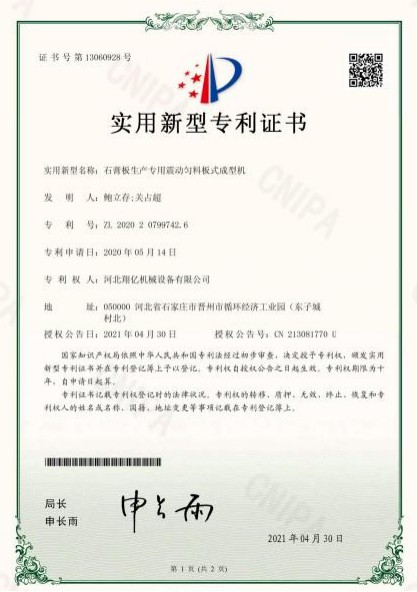
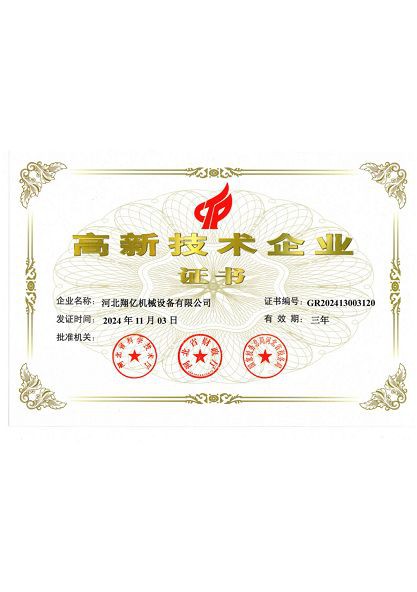
Our Certificate
FAQ
Shineye Mach Co., Ltd. is one of the most reliable manufacturers and suppliers of calcium silicate board production line in China, also supports customized service with reasonable price. Please feel free to buy advanced calcium silicate board production line made in China here from our factory. For quotation, contact us now.