




As a supplier of lightweight gypsum block production lines, I am often asked about the raw materials required for these production lines. In this blog post, I will delve into the essential raw materials, their characteristics, and their roles in the production of lightweight gypsum blocks.
1. Gypsum
Gypsum is the primary raw material for lightweight gypsum block production. It is a soft sulfate mineral composed of calcium sulfate dihydrate (CaSO₄·2H₂O). Gypsum is widely available and relatively inexpensive, making it an ideal material for mass - production of building blocks.
There are different types of gypsum, including natural gypsum and synthetic gypsum. Natural gypsum is mined from the earth, while synthetic gypsum is a by - product of industrial processes such as flue gas desulfurization in power plants. Both types can be used in the production of lightweight gypsum blocks, but they may have slightly different properties.
The quality of gypsum is crucial for the performance of the final product. High - quality gypsum should have a high calcium sulfate content, low impurities, and appropriate particle size distribution. When gypsum is heated to a certain temperature, it loses part of its water of crystallization and forms hemihydrate gypsum (CaSO₄·0.5H₂O), also known as plaster of Paris. This hemihydrate gypsum can then react with water again to form a hard, solid structure, which is the basis for the formation of gypsum blocks.


2. Aggregates
Aggregates are added to the gypsum mixture to reduce the density of the blocks and improve their insulation properties. There are several types of aggregates commonly used in lightweight gypsum block production:
Perlite
Perlite is a volcanic glass that expands when heated. It is lightweight, has good insulation properties, and is chemically inert. Perlite particles are porous, which helps to reduce the overall weight of the gypsum block. When added to the gypsum mixture, perlite can also improve the workability of the mixture and enhance the fire - resistance of the blocks.
Vermiculite
Vermiculite is a hydrated magnesium - aluminum - iron silicate mineral. It expands when heated, similar to perlite. Vermiculite has excellent insulation properties, sound - absorption capabilities, and fire - resistance. It can also improve the strength and durability of the gypsum blocks.
Polystyrene Beads
Polystyrene beads are another popular aggregate for lightweight gypsum blocks. They are lightweight, have low thermal conductivity, and are easy to handle. Polystyrene beads can be mixed with gypsum to create blocks with a very low density, making them suitable for applications where weight reduction is a priority.
3. Additives
Additives are used to improve the properties of the gypsum mixture and the final product. Here are some common additives:
Water - reducing Agents
Water - reducing agents are used to reduce the amount of water required in the gypsum mixture while maintaining its workability. By reducing the water content, the strength and durability of the gypsum blocks can be improved. These agents can also help to reduce the drying time of the blocks, which increases the production efficiency.
Retarders
Retarders are used to slow down the setting time of the gypsum mixture. This is particularly important in large - scale production, where the mixture needs to be transported and poured into molds before it sets. Retarders allow for more time to work with the mixture, ensuring that the blocks are formed correctly.
Foaming Agents
Foaming agents are used to create a cellular structure in the gypsum blocks, further reducing their density. These agents generate bubbles in the gypsum mixture, which are then trapped in the solidified gypsum. The resulting blocks have a lower weight and better insulation properties.
4. Reinforcing Materials
In some cases, reinforcing materials may be added to the gypsum blocks to improve their strength and crack - resistance.
Fibers
Fibers such as glass fibers, polypropylene fibers, or cellulose fibers can be added to the gypsum mixture. These fibers help to distribute stress within the block, reducing the likelihood of cracking. They can also improve the impact resistance of the blocks, making them more suitable for applications where they may be subjected to mechanical forces.
The Role of Our Production Lines
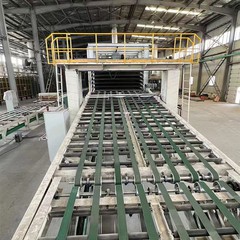
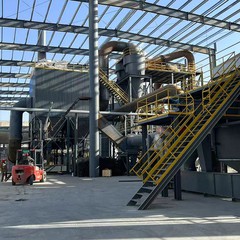
At our company, we offer a variety of lightweight gypsum block production lines, including the Hollow Gypsum Block Production Line, Eco - friendly Lightweight Gypsum Block Production Line, and Full - automatic Lightweight Gypsum Block Production Line. Our production lines are designed to handle different types of raw materials and produce high - quality lightweight gypsum blocks efficiently.
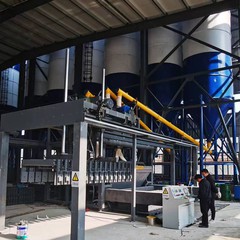
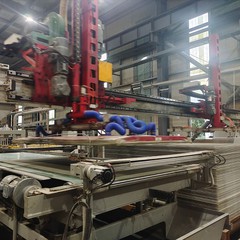
Our production lines are equipped with advanced technology and equipment to ensure accurate mixing of the raw materials, precise molding, and consistent quality of the final products. We also provide technical support and after - sales service to our customers, ensuring that they can operate the production lines smoothly and produce high - quality lightweight gypsum blocks.
Conclusion
The production of lightweight gypsum blocks requires a combination of gypsum, aggregates, additives, and sometimes reinforcing materials. Each raw material plays a crucial role in determining the properties of the final product, such as density, strength, insulation, and fire - resistance.
If you are interested in purchasing a lightweight gypsum block production line or have any questions about the raw materials or the production process, please feel free to contact us for further discussion. We are committed to providing you with the best solutions for your lightweight gypsum block production needs.
References
- ASTM C472 - 18, Standard Test Methods for Physical Testing of Gypsum Plasters and Gypsum Plaster Products.
- Building Materials Handbook: Gypsum and Gypsum Products, CRC Press.
- "Lightweight Building Materials: Properties and Applications" by John Doe, published by ABC Publishing.