

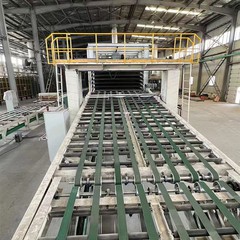
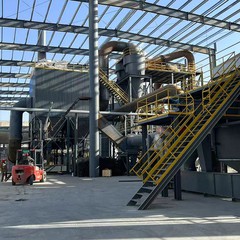
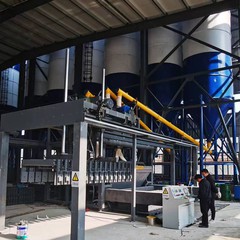
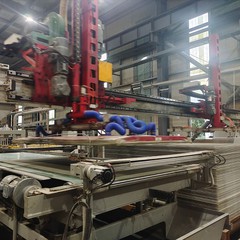




Shineye Mach Co., Ltd. is one of the leading manufacturers and suppliers of Egg Tray Machine in China. If you're going to buy the newest Egg Tray Machine made in China, welcome to get quotation from our factory. All customized products are with high quality and competitive price.
Products Description

From Waste Paper to Egg Trays
Egg Tray Machine converts waste paper – newspaper, cardboard, magazine, paper mill leftovers – into molded pulp trays for egg packaging. Finished trays do four jobs:
Protect eggs during transport
Separate individual eggs to prevent contact
Absorb shock from bumps and drops
Keep eggs neatly arranged for shelf display
The trays also work as retail packaging. Stack them on supermarket shelves. Clean presentation. Supports sales.
Manufacturer
Hebei Xiangyi Mechanical Co., Ltd. | Founded 2002 | 25,000 m² factory | 100+ employees | 50+ machine tools
Ten years in egg tray lines. German technology. Own engineering team for design, manufacturing, and service.
Technicians go to your site. Install. Debug. Train. Stay until the line runs right.


Technical Specifications
| Parameter | Details | Note |
|---|---|---|
| Hourly output | 1,000 – 7,000 trays | Depends on mold |
| Raw materials | Waste paper, newspaper, corrugated, magazine, mill leftovers | Locally available |
| Tray capacity | 30 eggs standard | Custom molds available |
| Quality standard | GB/T9775-2008 | National standard |
| Fuel options | Coal, oil, gas, LPG, waste steam | Choose cheapest local |
| Control | PLC + pneumatic | Automated operation |
| Application | Poultry farms, egg distributors, packaging suppliers | Breeding industry |
Production Process
Step 1 – Pulping
Waste paper + water in hydraulic pulper. Add functional additives if needed (waterproof, moisture-proof, anti-static)
Step 2 – Forming
Slurry goes to forming station. Vacuum pulls fibers onto mold. Wet blank comes out
Step 3 – Drying & hot pressing
Wet blank through drying line. Heat from coal, gas, oil, or waste steam. Hot press smooths the surface
Step 4 – Packing
Stack trays. Ready to ship
Simple flow:Raw material → pulping → storage tank → forming → drying → hot pressing → packing → finished product.
Environmental & Cost Benefits
No pollution: Recycled water. Closed loop. No waste water. No waste gas.
Recyclable trays: After storage, transport, and sales, trays can be recycled. Shred them. They decompose like paper. Harmless to nature.
Save water costs: Water circulates. No constant fresh supply needed.
Save material costs: Waste paper is cheap. Sometimes free. Stop buying foam trays from suppliers.
Save labor:
2-3 operators per shift. No manual tray forming.
Most users recover investment in 12-18 months.

Equipment :Four systems
pulping
molding
drying
packing

Key Advantages
Egg Tray Machine serves poultry farms, egg distributors, and packaging suppliers. Meets GB/T9775-2008. Users save on material and stop buying trays externally.
Egg protection + retail display
Trays separate, cushion, and present eggs well on shelves.
Clean + low cost
Recycled water, no pollution, cheap raw material.
Flexible
One machine, different molds, different products.
German technology
10 years experience. Own engineers. Full support.
FAQ
1. What is an egg tray machine?
+
-
A machine that turns waste paper into molded pulp trays for eggs. Processes newspaper, cardboard, magazine, mill leftovers. A standard tray holds 30 eggs. Custom molds available. Hourly output: 1,000 to 7,000 trays. Uses recycled water. No waste discharge. Meets GB/T9775-2008.
2. How does it work without chemicals?
+
-
No chemicals. Hydraulic pulper uses water and mechanical force to separate paper fibers. Vacuum pulls fibers onto mold. They tangle and form a wet blank. Dried and hot-pressed. Optional additives (waterproof, anti-static) only if specified. Physical process. Trays decompose like paper.
3. Automatic vs semi-automatic – what's the difference?
+
-
Semi-automatic: no dryer. Wet trays sun-dried. Needs labor, space, good weather. Rain stops production. Fully automatic: integrated dryer. Trays go straight from forming to drying. No weather delays. Less labor. Consistent quality. Higher upfront cost, lower operating cost.
4. What fuel should I use for drying?
+
-
Depends on local prices. Coal is cheapest where available. Natural gas is clean. LPG works but costs more. Waste steam from nearby factory costs almost nothing. Dryer can switch between fuel types. We can recommend based on your local fuel prices.
5. What after-sales service do you provide?
+
-
Technicians sent for installation and debugging. Stay until machine produces qualified products. Operator training included. PLC allows remote support. Warranty on non-wear parts. Spare parts shipped as needed. 10 years experience. German technology.
Contact

Send your target hourly output and fuel type. Get layout drawing and quote.
Jessica Li
Phone / WhatsApp: +86 18132648037
Email: xiangyijixielucia@yeah.net
Factory Address: North of Dongzicheng Village, Circular Economy Industrial Zone, Jinzhou City, Hebei Province, China