

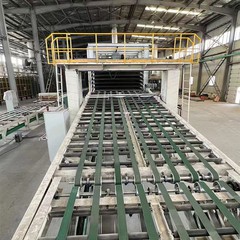
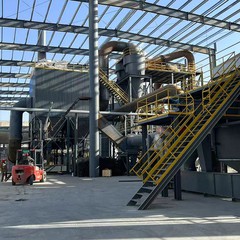
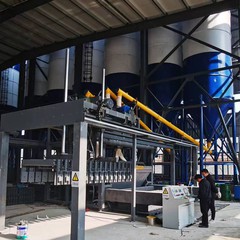
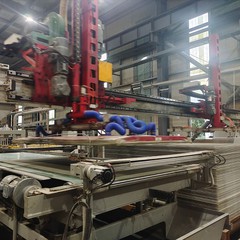
The drying stage is the most critical stage in a gypsum board production line.
While raw material preparation, batching and mixing, molding, cutting, and post-processing all significantly impact product quality, drying directly determines the physical properties, dimensional stability, and yield of the gypsum board. Improper drying control can easily lead to irreversible defects such as cracking, deformation, and reduced strength. Furthermore, drying accounts for over 40% of the entire production line's energy consumption, making it a core node affecting both quality and cost.
Why is drying the most critical?
Its decisive role in quality.
Gypsum board undergoes two stages during drying: free water evaporation and crystal water stabilization. A strict "drying curve" must be followed: initial low temperature and high humidity to prevent rapid surface dehydration and the formation of a hard shell; gradual temperature increase and humidity removal in the middle and later stages to ensure uniform drying both internally and externally.
Temperature and humidity fluctuations exceeding ±1℃ or ±3% RH can cause uneven internal stress, resulting in micro-cracks or warping, affecting core properties such as fire resistance and sound insulation.
High Process Complexity
Modern drying kilns are divided into 4-6 temperature zones, each with independent temperature and humidity control, working in conjunction with infrared ranging and airflow regulation systems to achieve dynamic balance.
Parameters need to be adjusted in real time based on the thickness of the sheet material (60-150mm) and the ambient temperature and humidity, requiring an extremely high degree of automation.
Energy Consumption and Environmental Focus
Drying is the most energy-intensive stage of the entire production line. Using heat pumps or waste heat recovery systems can save more than 50% of energy.
Advanced production lines have achieved "ultra-low emissions," with environmental standards comparable to coal-fired power plants, reflecting the trend of green manufacturing.
Advanced Intelligent Control
Intelligent drying systems can predict drying status based on AI models, automatically optimize temperature control strategies, reduce human intervention, and improve batch consistency.