

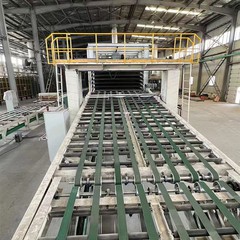
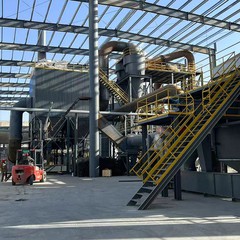
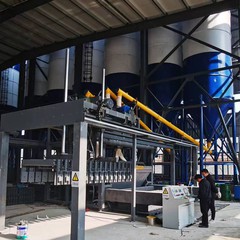
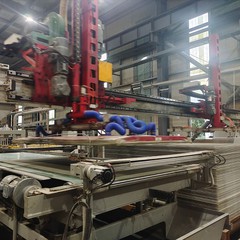
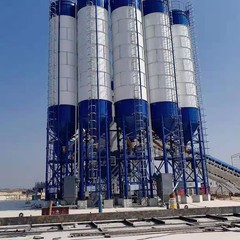



The energy consumption of a gypsum powder production line is mainly concentrated in the calcination and grinding stages, which together account for over 70% of the total energy consumption. Calcination is the largest heat energy consumption unit, while grinding is the main source of electricity consumption. By optimizing core processes, upgrading equipment, and introducing intelligent control, comprehensive energy savings of 20%-30% can be achieved.
1. Calcination Stage: Accounts for 40%-50% of energy consumption; Key point for energy reduction. This process requires heating and dehydrating dihydrate gypsum (CaSO₄·2H₂O) to convert it into hemihydrate gypsum (CaSO₄·0.5H₂O), which demands a huge amount of heat energy.
Energy Consumption Level: The theoretical heat consumption of natural gypsum is 5.02×10⁵~5.86×10⁵ kJ/t (120~140 kcal/kg). Due to its high water content (10%-15%), desulfurized gypsum's actual heat consumption can reach approximately 7.94×10⁵ kJ/t.
Significant Differences in Equipment Energy Efficiency: Fluidized bed furnaces have a thermal efficiency exceeding 60%, with unit heat consumption as low as 9.6×10⁵ kJ/t (230 kcal/kg). Old-style rotary kilns have a thermal efficiency of only 28%-35%, with energy consumption as high as 18.4×10⁵~20.9×10⁵ kJ/t (400~500 kcal/kg). (kcal/kg)
Energy Saving Path:
1. Replace traditional kilns with fluidized bed furnaces, saving nearly 50% energy.
2. Configure a waste heat recovery system to preheat raw materials or air using exhaust gas, reducing overall energy consumption by 20%-30%.

2. Grinding Stage: 25%-35% of energy consumption, the main electricity-consuming unit. Grinding crushed gypsum to 80-3000 mesh is a mechanical crushing process with high power consumption.
Equipment Energy Consumption Comparison:
European-style grinding mill unit energy consumption is 1.02–1.48 kWh/t, 60% lower than ball mills.
Vertical mills integrate drying and grinding, reducing energy consumption by 40%-50% compared to ball mills.
Influencing Factors:
Feed particle size, moisture (≤15%), finished product fineness, and system sealing all directly affect energy consumption.
Optimization Measures:
Select high-efficiency and energy-saving equipment such as HLMX vertical mills or MTW European-style mills.
Implement closed-loop circulation; unqualified coarse powder is automatically returned to grinding, improving grinding efficiency.