

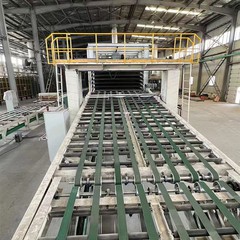
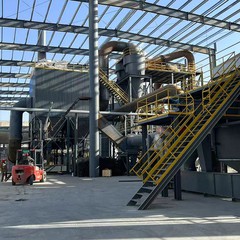
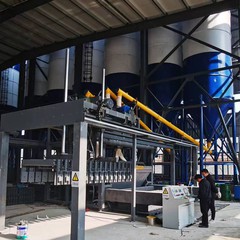
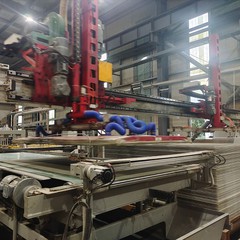
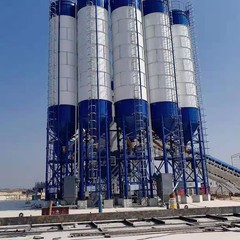
Judging the quality of a gypsum block production line requires a comprehensive evaluation from three dimensions: equipment parameters, automation level, and performance of mainstream brands. The core aspects are stability, production efficiency, and technological maturity.
Judging Quality Based on Equipment Parameters
Molding Cycle and Capacity Matching
High-quality equipment should have a molding cycle of ≤5 minutes/mold (i.e., 12 molds/hour or more). For solid block lines, 6-8 molds/hour and for hollow block lines, 4-5 molds/hour are the industry mainstream standards.
The number of mold cavities is typically 8-16, allowing for the molding of 8-16 blocks at a time, increasing output per unit time.
Mold Precision and Durability
The mold material should be alloy steel + hard chrome plating + mirror polishing, with a surface roughness ≤0.1μm, ensuring block size error ≤±1mm.
The maximum ejection force should reach 1350KN or more to ensure smooth demolding and reduce scrap rate.
Ingredient Batching and Mixing Accuracy
The batching system must be equipped with an electronic scale. Water metering range: 200–450L (accuracy ±1%); powder weighing capacity: 500kg (error ≤0.5%).
The mixer should preferably be a dual-high-speed impeller type with a tank volume ≥800L to ensure a uniform, lump-free slurry.
Energy Consumption and Environmental Indicators
A rated power between 7.5–18.5kW is reasonable. Too high a power consumption will result in excessive electricity, while too low a power consumption will affect stability.
The use of industrial by-products such as desulfurized gypsum and phosphogypsum is supported, demonstrating green manufacturing capabilities.