

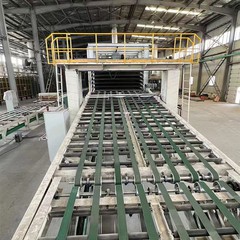
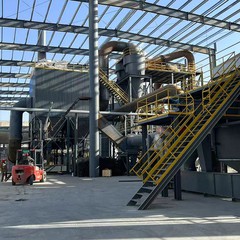
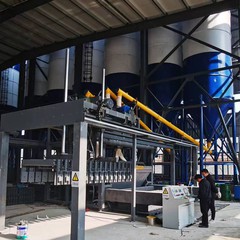
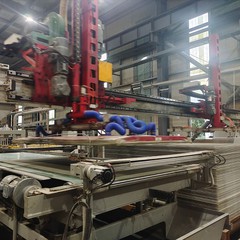
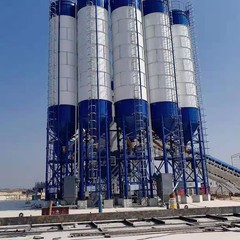
Cement mortar mixing plants are primarily designed for dry-mix mortar production. Their structural design prioritizes efficiency, environmental friendliness, and automation, featuring modular and closed-loop production capabilities. They are suitable for various engineering needs, including masonry, plastering, and floor mortar.
Main Structural Components
Cement mortar mixing plants typically adopt a tower-type or stepped layout, consisting of multiple functional modules, mainly including:
Wet Sand Pretreatment and Drying System: This system dries and cools the raw sand. Three-cylinder dryers are gradually replacing single-cylinder models to improve energy efficiency.

Raw Material Storage System: This system stores yellow sand, cement, thickening powder, fly ash, and admixtures. The silos are equipped with level gauges and anti-bridging devices to prevent blockages.
Batching and Metering System: This system uses high-precision sensors to achieve accurate proportioning of aggregates, powders, and liquids, supporting automatic compensation and adjustment.
Mixing and Mixing System: The core component is a single-shaft pear-shaped or twin-shaft gravity-free mixer, ensuring uniform mixing, especially suitable for the production of specialty mortars.
Packaging and Bulk System: Finished mortar can be automatically packaged into bags or transported by bulk truck.
Fully Automated Control System: Utilizes microcomputer control to achieve fully automated operation from material feeding to material discharge.