

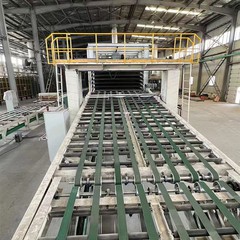
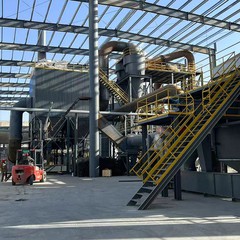
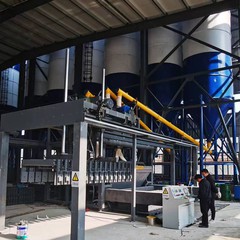
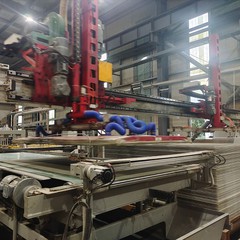
Assessing the energy efficiency of a gypsum block production line requires a comprehensive evaluation from three dimensions: the energy efficiency of equipment parameters, the resource utilization rate of automation, and the technological optimization level of mainstream brands. The core considerations are the energy consumption ratio per unit output and production continuity.
Assessing Energy Efficiency Based on Equipment Parameters
Rated Power and Load Matching
The rated power of mainstream equipment in the industry is 7.5–18.5kW, suitable for small and medium-sized fully automated lines; large units can reach 30–240kW, requiring appropriate selection based on production capacity.
High-efficiency equipment exhibits power fluctuations of less than ±5% during full-load operation, avoiding energy waste caused by over-engineering.
Molding Cycle and Unit Energy Consumption
High-efficiency equipment has a molding cycle of ≤6 minutes/mold (i.e., 6–8 molds per hour), resulting in lower energy consumption per block.
Using a dual-high-speed paddle mixer (800L tank) can shorten the mixing time to within 90 seconds, reducing the continuous load on the motor.
Energy-Saving Hydraulic System Design
Equipped with an automatic high/low pressure switching device, it switches to low pressure mode (150 bar) during non-working periods, reducing idle energy consumption.
The central hydraulic station uses variable frequency control technology, saving more than 20% energy compared to traditional fixed frequency systems.
Optimized Drying and Dehydration Processes
The production line integrating vacuum dehydration and automatic drying devices can shorten drying time by 30%–50% and reduce heat energy consumption.
The drying chamber adopts an insulation layer and circulating air duct design, improving thermal efficiency and controlling temperature difference within ±3℃.
Raw Material Utilization and Scrap Rate
A high-precision batching system (water ±1%, powder ≤0.5% error) reduces rework caused by batching deviations.
The mold surface roughness Ra value reaches 0.8–1.6, ensuring smooth demolding and controlling the scrap rate to <1.5%.