

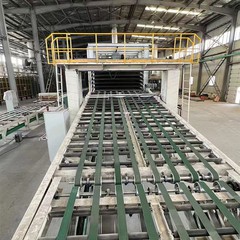
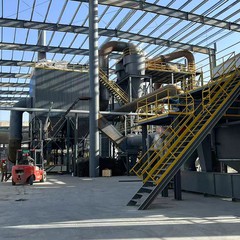
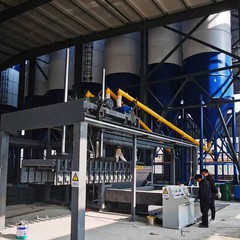
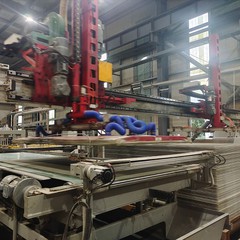
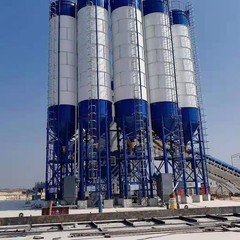



Hey there! As a supplier of lightweight gypsum block production lines, I often get asked about various aspects of the production process. One crucial factor that plays a significant role in the quality of lightweight gypsum blocks is the block surface smoothness control. In this blog, I'll break down what block surface smoothness control is all about in a lightweight gypsum block production line.
What is Block Surface Smoothness?
First off, let's understand what we mean by block surface smoothness. When we talk about the surface of a lightweight gypsum block, a smooth surface is one that's free from bumps, cracks, and irregularities. It's like having a nice, even finish on a piece of furniture. A smooth surface not only looks better but also has practical benefits. For example, it makes the blocks easier to install, and it can improve the overall aesthetic of the building where these blocks are used.
Why is Surface Smoothness Control Important?
There are several reasons why controlling the surface smoothness of lightweight gypsum blocks is crucial.
Aesthetics
In the construction industry, looks matter. Buildings are not just structures; they're also works of art. Smooth - surfaced gypsum blocks give a clean and professional look to the interior and exterior walls. Whether it's a residential building or a commercial space, the visual appeal of the walls can significantly impact the overall impression of the property.
Functionality
Smooth surfaces are easier to paint, plaster, or tile. If the surface of the gypsum block is rough, it can cause problems during the finishing process. For instance, paint may not adhere properly, and tiles may not lay flat. This can lead to additional time and cost for rework.
Durability
A smooth surface is less likely to accumulate dirt and dust. It's also more resistant to wear and tear. In high - traffic areas, a smooth - surfaced gypsum block can maintain its appearance for a longer time compared to a rough one.
Factors Affecting Block Surface Smoothness in a Production Line
Now, let's look at the factors that can influence the surface smoothness of lightweight gypsum blocks in a production line.


Raw Materials
The quality of the raw materials used in the production of gypsum blocks is a major factor. Gypsum powder with a consistent particle size distribution is essential. If the particle size is too large or uneven, it can result in a rough surface. Also, the quality of the additives used, such as foaming agents and binders, can affect the surface finish. For example, a poor - quality foaming agent may create uneven bubbles in the block, leading to a rough surface.
Mixing Process
The way the raw materials are mixed is crucial. A well - mixed batch ensures that all the components are evenly distributed. If the mixing is not done properly, there may be areas in the block where the gypsum and additives are not well combined. This can result in a non - uniform surface. The mixing time, speed, and the type of mixer used all play a role in achieving a smooth surface.
Molding and Casting
The mold used in the production process also affects the surface smoothness. A mold with a smooth interior surface will transfer that smoothness to the block. Any scratches or imperfections in the mold can be imprinted on the block. Additionally, the way the gypsum mixture is poured into the mold and the vibration process during casting can impact the surface. Proper vibration helps to remove air bubbles and ensures a more even distribution of the mixture, resulting in a smoother surface.
Curing Process
The curing process is when the gypsum block hardens. If the curing conditions are not right, it can lead to surface defects. For example, if the block dries too quickly, it may develop cracks on the surface. On the other hand, if the curing is too slow, the block may not reach its full strength, and the surface may be more prone to damage.
How to Control Block Surface Smoothness in a Production Line
As a supplier of lightweight gypsum block production lines, we've developed several strategies to control the surface smoothness.
Quality Control of Raw Materials
We carefully select our raw materials and conduct regular quality checks. We work with reliable suppliers to ensure that the gypsum powder and additives meet our standards. By analyzing the particle size distribution and other properties of the raw materials, we can make adjustments to the production process if needed.
Optimized Mixing
Our production lines are equipped with advanced mixers that are designed to achieve a homogeneous mixture. We have set specific mixing parameters, such as mixing time and speed, to ensure that all the components are well - blended. This helps to create a more uniform block with a smooth surface.
High - Quality Molds
We use high - quality molds made from materials that are resistant to wear and have a smooth interior finish. We also maintain and clean the molds regularly to prevent any build - up of gypsum or other debris that could affect the surface of the blocks.
Precise Curing
We control the curing environment, including temperature and humidity, to ensure that the blocks cure properly. This helps to prevent surface defects such as cracks and unevenness.
Our Product Lines and Surface Smoothness
We offer a range of production lines, each designed to meet different customer needs.
- Eco - friendly Lightweight Gypsum Block Production Line: This production line is focused on producing environmentally friendly gypsum blocks. Our advanced technology ensures that the blocks have a smooth surface while being eco - friendly.
- Hollow Gypsum Block Production Line: For those looking to produce hollow gypsum blocks, our production line is designed to create blocks with a consistent and smooth surface. The unique design of the molds and the production process helps to achieve this.
- Large - scale Lightweight Gypsum Block Production Line: If you're planning to produce gypsum blocks on a large scale, our production line can handle the volume while maintaining the high - quality surface smoothness.
Conclusion
In conclusion, block surface smoothness control is a critical aspect of lightweight gypsum block production. By understanding the factors that affect surface smoothness and implementing effective control measures, we can produce high - quality gypsum blocks that meet the needs of the construction industry.
If you're interested in our lightweight gypsum block production lines and want to learn more about how we control the surface smoothness of the blocks, feel free to reach out to us. We're always happy to discuss your specific requirements and help you find the best solution for your production needs.
References
- Construction Materials Handbook: Gypsum and Related Products
- Journal of Building Materials and Construction Technology