

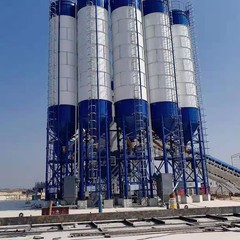


As a supplier of high strength gypsum block production lines, I've witnessed firsthand the growing demand for these innovative building materials. High strength gypsum blocks are becoming increasingly popular in the construction industry due to their numerous advantages, including excellent fire resistance, sound insulation, and energy efficiency. One of the most crucial properties of these blocks is their impact resistance, which plays a significant role in ensuring the durability and safety of buildings.
Understanding Impact Resistance
Impact resistance refers to the ability of a material to withstand sudden forces or impacts without breaking or cracking. In the context of high strength gypsum blocks, impact resistance is a measure of how well the blocks can endure external forces, such as accidental collisions, vibrations, or even natural disasters. A high impact resistance is essential for maintaining the structural integrity of buildings, especially in areas prone to seismic activity or high-traffic environments.
Factors Affecting Impact Resistance
Several factors influence the impact resistance of high strength gypsum blocks produced by our production lines. These factors can be broadly categorized into material properties, manufacturing processes, and design considerations.
Material Properties
The quality of the raw materials used in the production of high strength gypsum blocks is a critical determinant of their impact resistance. Gypsum, the primary ingredient, should have high purity and appropriate crystal structure to ensure optimal strength and durability. Additionally, the use of additives and reinforcement materials can significantly enhance the impact resistance of the blocks. For example, the incorporation of fiber reinforcement, such as glass fibers or synthetic fibers, can improve the block's ability to absorb and distribute impact energy, reducing the risk of cracking and fragmentation.
Manufacturing Processes
The manufacturing process of high strength gypsum blocks also plays a crucial role in determining their impact resistance. Our production lines are equipped with advanced technology and precision equipment to ensure consistent quality and performance. The mixing, molding, and curing processes are carefully controlled to optimize the block's density, porosity, and internal structure. By maintaining a uniform distribution of gypsum and additives, we can enhance the block's strength and impact resistance.
Design Considerations
The design of high strength gypsum blocks can also influence their impact resistance. Factors such as block size, shape, and joint design can affect how the blocks respond to external forces. For example, larger blocks may have a higher impact resistance due to their increased mass and surface area. Additionally, the use of interlocking joints can improve the overall stability and impact resistance of the wall system.
Testing and Evaluation
To ensure the quality and performance of our high strength gypsum blocks, we conduct rigorous testing and evaluation procedures. These tests are designed to simulate real-world conditions and assess the block's impact resistance under various scenarios.
Drop Tests
Drop tests are commonly used to evaluate the impact resistance of high strength gypsum blocks. In this test, a weighted object is dropped from a specified height onto the block, and the resulting damage is observed and measured. The test can provide valuable information about the block's ability to withstand sudden impacts and its resistance to cracking and fragmentation.
Compression Tests
Compression tests are another important method for evaluating the impact resistance of high strength gypsum blocks. In this test, a compressive force is applied to the block until it fails. The test can measure the block's compressive strength and its ability to withstand pressure without breaking.
Seismic Simulation Tests
Seismic simulation tests are used to evaluate the performance of high strength gypsum blocks under seismic conditions. These tests simulate the ground motion and vibrations caused by earthquakes and assess the block's ability to maintain its structural integrity. By conducting these tests, we can ensure that our high strength gypsum blocks meet the highest standards of safety and durability.
Benefits of High Impact Resistance
High impact resistance is a crucial property of high strength gypsum blocks, offering several benefits for the construction industry.
Enhanced Durability
High strength gypsum blocks with excellent impact resistance are more durable and can withstand the wear and tear of daily use. They are less likely to crack or break, reducing the need for frequent repairs and replacements. This can result in significant cost savings over the lifespan of the building.
Improved Safety
In areas prone to seismic activity or high-traffic environments, high impact resistance is essential for ensuring the safety of building occupants. High strength gypsum blocks can help to prevent structural damage and collapse during earthquakes or other natural disasters, protecting lives and property.


Energy Efficiency
High strength gypsum blocks with high impact resistance can also contribute to energy efficiency in buildings. The dense structure of the blocks provides excellent insulation, reducing heat transfer and energy consumption. This can result in lower energy bills and a more sustainable building environment.
Our Production Lines
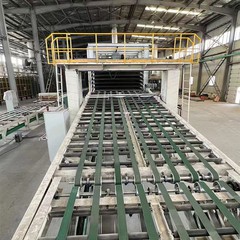
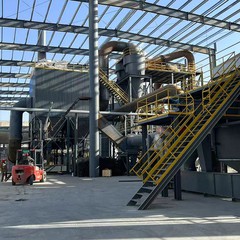
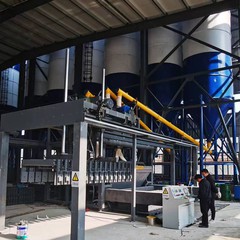
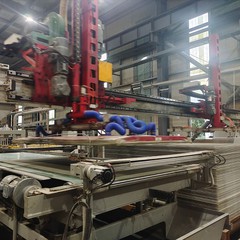
At our company, we offer a range of high strength gypsum block production lines to meet the diverse needs of our customers. Our production lines are designed to produce high-quality gypsum blocks with excellent impact resistance and other desirable properties.
High-strength Load-bearing Gypsum Block Production Line
Our High-strength Load-bearing Gypsum Block Production Line is specifically designed to produce load-bearing gypsum blocks with high strength and impact resistance. This production line uses advanced technology and precision equipment to ensure consistent quality and performance. The blocks produced by this line are suitable for a wide range of applications, including residential and commercial buildings.
Precision Gypsum Block Line
Our Precision Gypsum Block Line is designed to produce high-precision gypsum blocks with excellent dimensional accuracy and surface finish. This production line uses advanced molding and curing processes to ensure the blocks are uniform in size and shape. The blocks produced by this line are ideal for applications where precision and aesthetics are important, such as interior walls and partitions.
Full-automatic High-strength Gypsum Block Production Line
Our Full-automatic High-strength Gypsum Block Production Line is a state-of-the-art production line that offers high efficiency and productivity. This production line is fully automated, from raw material handling to block stacking, reducing labor costs and increasing production capacity. The blocks produced by this line are of high quality and have excellent impact resistance.
Conclusion
In conclusion, the impact resistance of high strength gypsum blocks produced by our production lines is a critical property that offers several benefits for the construction industry. By understanding the factors that affect impact resistance and conducting rigorous testing and evaluation, we can ensure that our high strength gypsum blocks meet the highest standards of quality and performance. Our production lines are designed to produce high-quality gypsum blocks with excellent impact resistance, durability, and energy efficiency. If you are interested in learning more about our high strength gypsum block production lines or would like to discuss your specific requirements, please feel free to contact us. We look forward to the opportunity to work with you and provide you with the best solutions for your construction needs.
References
- ASTM International. (2019). Standard Specification for Gypsum Board. ASTM C1396/C1396M - 19.
- Building Research Establishment. (2018). Gypsum Products in Construction: A Guide. BRE Report BR 442.
- International Code Council. (2018). International Building Code. ICC.