

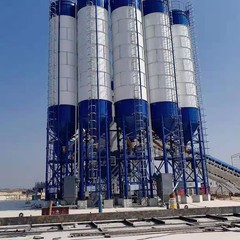



As a supplier of Heavy Duty Gypsum Block Lines, I am often asked about the production cycle of gypsum blocks in our advanced production lines. In this blog, I will delve into the detailed production cycle of gypsum blocks in a heavy - duty gypsum block line, providing you with a comprehensive understanding of the process.
Raw Material Preparation
The first step in the production cycle of gypsum blocks is the preparation of raw materials. Gypsum, the primary raw material, is usually sourced from natural gypsum mines or industrial by - products such as flue - gas desulfurization gypsum. The quality of the gypsum greatly affects the final properties of the gypsum blocks.
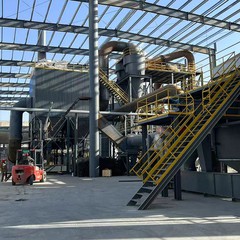
Before use, the gypsum needs to be crushed and ground into a fine powder. This process is crucial as it determines the reactivity of the gypsum during the subsequent hydration process. Our heavy - duty gypsum block lines are equipped with high - performance crushers and grinders that can efficiently process gypsum to the required fineness.
In addition to gypsum, other additives may be added to improve the performance of the gypsum blocks. These additives can include retarders to control the setting time, water - reducing agents to enhance the workability of the gypsum slurry, and fibers to increase the strength and durability of the blocks.
Mixing
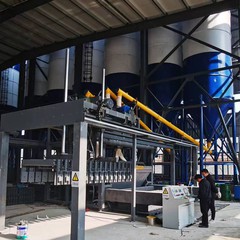
Once the raw materials are prepared, they are transferred to the mixing system. In our heavy - duty gypsum block lines, a high - speed mixer is used to ensure uniform mixing of the gypsum powder, additives, and water. The mixing process is carefully controlled to achieve the right consistency of the gypsum slurry.
The ratio of water to gypsum is a critical parameter. If the water content is too high, the gypsum blocks may have low strength and poor dimensional stability. On the other hand, if the water content is too low, the slurry may be difficult to pour and shape. Our advanced mixing technology can precisely control the water - to - gypsum ratio, ensuring the quality of the gypsum blocks.
Molding
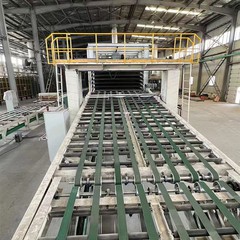
After the gypsum slurry is well - mixed, it is poured into molds. Our heavy - duty gypsum block lines offer a variety of mold options to produce gypsum blocks of different sizes and shapes. The molds are designed to be durable and easy to clean, ensuring high - quality block production.
The gypsum slurry fills the molds under the action of gravity or with the help of a pouring system. During the filling process, care is taken to avoid air bubbles in the slurry, as air bubbles can reduce the strength and appearance of the gypsum blocks.


Setting and Curing
Once the molds are filled with the gypsum slurry, the setting process begins. Gypsum undergoes a chemical reaction with water, known as hydration, which causes it to harden. This setting process usually takes a few hours, depending on the type of gypsum and the additives used.
After the initial setting, the gypsum blocks are removed from the molds. Then, they enter the curing stage. Curing is an important process that allows the gypsum blocks to gain strength over time. The curing conditions, such as temperature and humidity, need to be carefully controlled. Our heavy - duty gypsum block lines are equipped with curing chambers that can provide optimal curing conditions, ensuring the high - quality of the gypsum blocks.
Cutting and Finishing
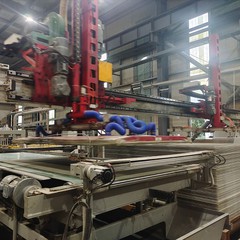
After curing, the gypsum blocks may need to be cut to the desired length and width. Our heavy - duty gypsum block lines are equipped with precision cutting equipment that can accurately cut the blocks to the required dimensions.
In addition to cutting, the gypsum blocks may also undergo surface finishing processes, such as sanding and polishing, to improve their appearance and smoothness. This step is important for the aesthetic appeal of the gypsum blocks, especially when they are used in interior decoration.
Quality Inspection
Before the gypsum blocks are ready for shipment, a comprehensive quality inspection is carried out. This inspection includes checking the dimensions, strength, density, and appearance of the gypsum blocks. Our heavy - duty gypsum block lines are equipped with advanced quality control systems that can detect any defects in the blocks.
Only the gypsum blocks that meet the strict quality standards are allowed to leave the production line. This ensures that our customers receive high - quality gypsum blocks that can meet their construction needs.
The Advantages of Our Heavy - Duty Gypsum Block Lines
Our company offers several types of advanced gypsum block production lines, including the Modular High - strength Gypsum Block Production Line, the Multi - function High - strength Gypsum Block Production Line, and the Precision Gypsum Block Line. These production lines are designed with high - end technology and advanced equipment, which can ensure high - efficiency and high - quality gypsum block production.
The modular design of our production lines allows for easy installation, operation, and maintenance. They can also be customized according to the specific needs of our customers. Whether you need to produce small - scale or large - scale gypsum blocks, our production lines can meet your requirements.
Contact Us for Purchase and Negotiation
If you are interested in our heavy - duty gypsum block lines or have any questions about the production cycle of gypsum blocks, please feel free to contact us. We are committed to providing you with the best products and services. Our professional team will be happy to discuss your needs and offer you the most suitable solutions for your gypsum block production.
References
- Smith, J. (2018). Gypsum Block Production Technology. Construction Materials Journal, 12(3), 45 - 52.
- Brown, A. (2019). Advanced Gypsum Block Manufacturing Processes. Industrial Engineering Review, 20(2), 67 - 74.