

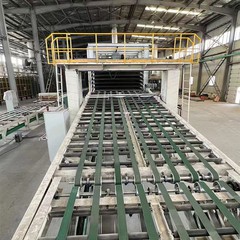
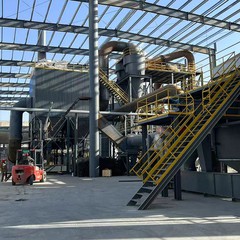
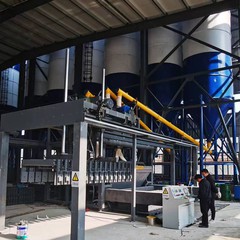



Optimizing bottleneck processes and production line balance rate is the core path to improving the capacity of a gypsum board production line. The key lies in identifying and overcoming the "bottleneck" links, enabling each process to operate efficiently and collaboratively.
Accurately Identifying Bottleneck Processes: Finding the Capacity "Bottlenecks"
Bottleneck processes determine the maximum output of the entire line. They can be located using the following methods:
Observe work-in-process inventory: If there is a severe accumulation of semi-finished products at a certain workstation (such as frequent congestion at the drying kiln inlet), while downstream equipment is idling, this workstation is very likely the bottleneck.
Analyze process cycle time: Measure the actual operating time of each process; the longest time taken is the current bottleneck. For example, if the forming section requires 25 seconds/board, while drying requires 40 seconds/board, then drying is the bottleneck.
Utilize data monitoring systems: Use MES or ERP systems to statistically analyze equipment utilization, downtime frequency, and output fluctuations. Processes that consistently operate at near 100% load are the bottlenecks.
Note: Bottlenecks are not static. Optimizing one process may shift the bottleneck to another, requiring dynamic monitoring.
Optimizing Bottleneck Processes: Releasing Single-Point Capacity
For identified bottlenecks, take targeted measures:
Increase Resource Investment: In key bottleneck processes such as drying and cutting, appropriately increase the number of equipment or extend working hours to directly improve processing capacity.
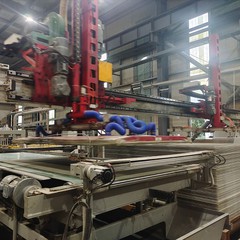
Technology Upgrades and Automation: Introduce efficient hot air circulation systems, intelligent temperature control algorithms, or automated loading and unloading robots to shorten single-board processing cycles.
Process Improvement and Time Compression: Adopt SMED (Short-Size-Device Change) technology to reduce equipment setup time; optimize material supply rhythm to avoid downtime due to material shortages.
Personnel Skill Enhancement: Assign skilled workers to operate bottleneck equipment and conduct multi-skilled worker training to ensure personnel stability and efficient operation.