

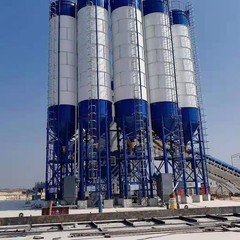



In the construction industry, fireproof gypsum boards are highly sought - after due to their excellent fire - resistant properties and versatility. As a leading supplier of [Fireproof Gypsum Board Production Line], I am excited to share with you the cutting process of a fireproof gypsum board production line.
1. Raw Material Preparation
Before the cutting process begins, it is essential to have the right raw materials. The main components of fireproof gypsum boards are gypsum powder, additives, and water. Gypsum powder is the base material, and additives are used to enhance properties such as fire resistance, strength, and water resistance.
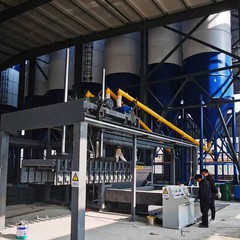
The raw materials are first measured and mixed in a mixer. The mixing process is crucial as it ensures a homogeneous mixture. Precise control of the water - to - gypsum ratio is necessary to achieve the desired consistency of the slurry. Once the mixture is well - blended, it is ready to be formed into boards.
2. Board Forming
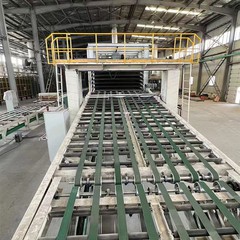
The mixed slurry is transferred to a forming station. Here, the slurry is poured onto a moving conveyor belt. Two layers of paper (in the case of paper - faced gypsum boards) or a special mold (in the case of paperless gypsum boards) are used to contain the slurry. The conveyor belt moves at a controlled speed, and the slurry spreads evenly between the paper layers or in the mold.
As the conveyor moves, the slurry begins to set. This setting process is a chemical reaction that hardens the gypsum. The time for setting depends on factors such as the type of gypsum, additives, and temperature. During this stage, the board takes its initial shape and gains some strength.
3. Pre - Cutting Inspection
Before the actual cutting, the formed boards go through a pre - cutting inspection. This inspection is to ensure that the boards meet the quality standards. The thickness, width, and surface quality of the boards are checked. Any boards with visible defects, such as uneven surfaces, cracks, or improper thickness, are removed from the production line.
4. Cutting Process
The cutting process is a critical step in the production of fireproof gypsum boards. There are several methods of cutting, and the choice of method depends on the production requirements and the type of board.
4.1 Rotary Cutting
Rotary cutting is a common method used in fireproof gypsum board production lines. In this method, a rotating blade is used to cut the boards. The blade rotates at a high speed and cuts through the board as it moves along the conveyor belt. The advantage of rotary cutting is its high efficiency. It can cut boards quickly and accurately. The cutting speed can be adjusted according to the production rate and the thickness of the boards.
4.2 Guillotine Cutting
Guillotine cutting is another method. A guillotine - style blade is used to make a straight cut across the board. This method is suitable for cutting boards of different sizes. The blade descends vertically onto the board, and the cutting force is applied evenly. Guillotine cutting is often used when a precise and clean cut is required.
4.3 Laser Cutting
Laser cutting is a more advanced method. It uses a high - energy laser beam to cut through the board. Laser cutting offers high precision and can cut complex shapes. However, it is relatively more expensive and requires specialized equipment. Laser cutting is often used for custom - made or high - precision fireproof gypsum boards.
5. Cutting Accuracy and Quality Control
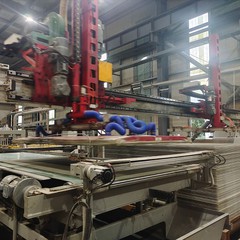
Maintaining cutting accuracy is crucial for the quality of fireproof gypsum boards. The cutting dimensions must be within the specified tolerances. To ensure accuracy, modern fireproof gypsum board production lines are equipped with advanced control systems. These systems use sensors to measure the position of the boards and adjust the cutting process accordingly.
Quality control is also an important aspect of the cutting process. After cutting, the boards are inspected again to check the cutting quality. The edges of the boards should be smooth and free of burrs. Any boards with poor cutting quality are rejected.


6. Post - Cutting Processing
After cutting, the fireproof gypsum boards may go through some post - cutting processing steps. These steps include sanding the edges to make them smoother, applying surface treatments, and packaging. Sanding helps to improve the appearance of the boards and makes them easier to install. Surface treatments can enhance the fire - resistant, water - resistant, or decorative properties of the boards.
7. Our Production Lines
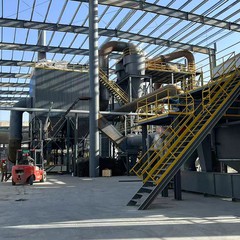
As a supplier of [Fireproof Gypsum Board Production Line], we offer a range of high - quality production lines. Our [Fireproof Gypsum Board Production Line] is designed to be efficient, reliable, and easy to operate. It can produce fireproof gypsum boards of different sizes and thicknesses.
In addition to the fireproof gypsum board production line, we also provide [Semi - automatic Paperless Gypsum Board Production Line] and [Waterproof Gypsum Board Production Line]. You can learn more about our products by visiting the following links:
- Semi - automatic Paperless Gypsum Board Production Line
- Fireproof Gypsum Board Production Line
- Waterproof Gypsum Board Production Line
8. Contact Us for Purchase
If you are interested in purchasing a fireproof gypsum board production line or have any questions about our products, we encourage you to contact us. Our team of experts is ready to provide you with detailed information and support. We can help you choose the right production line according to your specific needs and production requirements.
References
- Smith, J. (2018). Gypsum Board Production Technology. Construction Materials Journal.
- Johnson, A. (2020). Advanced Cutting Techniques in Gypsum Board Manufacturing. Manufacturing Review.