

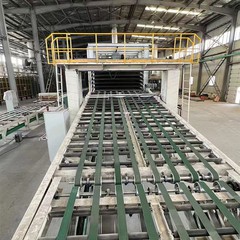
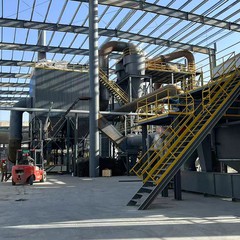
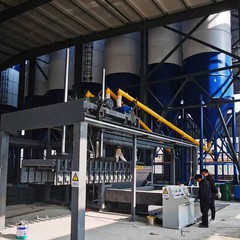
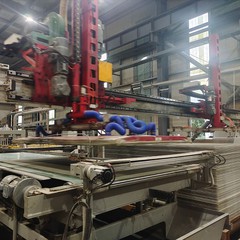
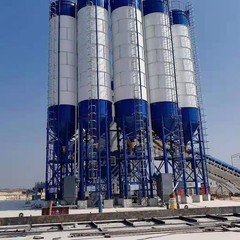



Maintaining an Automatic Paperless Gypsum Board Production Line presents a unique set of challenges that every supplier, including myself, must grapple with. As a provider of such production lines, I have witnessed firsthand the complexities involved in keeping these high - tech systems running smoothly.


Technical Challenges
One of the primary technical challenges is the precision of the machinery. Automatic paperless gypsum board production lines rely on a series of highly calibrated machines to mix, mold, and cut the gypsum boards. Any deviation in the calibration can lead to boards of inconsistent thickness, density, or quality. For example, the mixing process requires exact proportions of gypsum, water, and additives. A slight miscalculation can result in a board that is either too brittle or too soft. Regular calibration checks are essential, but they can be time - consuming and require specialized skills.
The automation systems that control the production line also pose a significant challenge. These systems are often complex, integrating multiple sensors, controllers, and software programs. Software glitches or sensor malfunctions can disrupt the entire production process. For instance, a faulty sensor might misread the moisture content of the gypsum mixture, leading to improper drying and a defective final product. Keeping the automation software up - to - date and ensuring the reliability of the sensors is a continuous battle.
Another technical hurdle is the wear and tear of the machinery. The high - speed operation of the production line subjects the equipment to significant stress. Components such as conveyor belts, cutting blades, and molding dies need to be regularly inspected and replaced. If not addressed in a timely manner, worn - out parts can cause production delays and quality issues. For example, a dull cutting blade can result in rough edges on the gypsum boards, reducing their marketability.
Quality Control Challenges
Maintaining consistent quality is a constant challenge in the production of paperless gypsum boards. Quality control starts from the raw materials. The quality of the gypsum, additives, and other inputs can vary from batch to batch. Ensuring that each batch meets the required standards is crucial. For example, the purity of the gypsum can affect the strength and fire - resistance of the boards. Conducting regular quality tests on the raw materials is necessary, but it adds to the overall production cost and time.
During the production process, there are numerous factors that can affect the quality of the final product. Temperature and humidity control are critical. If the drying process is not carried out at the right temperature and humidity levels, the boards can develop cracks or warping. Monitoring and adjusting these environmental factors in real - time is essential but can be difficult, especially in large - scale production facilities.
Inspecting the finished boards for defects is also a challenge. With an automatic production line, thousands of boards can be produced in a short period. Manual inspection is not practical, so automated inspection systems are used. However, these systems may not always detect all types of defects, such as small internal cracks or surface imperfections. Developing more advanced inspection technologies is an ongoing effort in the industry.
Maintenance and Downtime Challenges
Maintenance is a necessary part of keeping an automatic paperless gypsum board production line operational. However, it often requires shutting down the production line, which can lead to significant downtime. Scheduled maintenance is essential to prevent unexpected breakdowns, but it needs to be carefully planned to minimize the impact on production. Unscheduled maintenance, such as emergency repairs, can be even more disruptive.
The cost of maintenance is another concern. Replacing parts, hiring skilled technicians, and conducting regular maintenance checks can be expensive. Balancing the cost of maintenance with the need to keep the production line running efficiently is a delicate task. For example, investing in high - quality parts may reduce the frequency of replacements but can be more expensive upfront.
Environmental and Regulatory Challenges
Environmental regulations play a significant role in the operation of a paperless gypsum board production line. The production process generates waste, including gypsum dust and excess materials. Proper disposal of this waste is required to comply with environmental laws. Implementing waste management systems can be costly and complex. For example, installing dust collection systems to prevent gypsum dust from being released into the environment requires significant investment.
Energy consumption is also a major environmental concern. Automatic production lines are energy - intensive, and reducing energy consumption is not only good for the environment but also helps to lower production costs. Developing more energy - efficient technologies and optimizing the production process to reduce energy usage is a challenge that the industry is constantly working on.
Market and Competition Challenges
The market for gypsum boards is highly competitive. Customers are increasingly demanding high - quality, cost - effective products. As a supplier of automatic paperless gypsum board production lines, I need to ensure that the production lines I provide can produce boards that meet these market demands. This requires continuous innovation and improvement in the production technology.
New entrants in the market are constantly emerging, offering alternative production solutions. To stay competitive, I need to keep up with the latest industry trends and technological advancements. For example, some competitors may offer Semi - automatic Paperless Gypsum Board Production Line at a lower cost or with unique features.
Solutions and Future Outlook
To address these challenges, several strategies can be implemented. Regular training for the production line operators and maintenance staff is essential to ensure that they have the skills and knowledge to operate and maintain the equipment properly. Investing in research and development can lead to the development of more reliable and efficient production technologies.
In terms of quality control, implementing advanced sensor technologies and data analytics can help to detect and prevent quality issues in real - time. For example, using sensors to monitor the moisture content, temperature, and other key parameters during the production process can allow for immediate adjustments.
To reduce downtime, predictive maintenance techniques can be employed. By analyzing data from the production line, potential equipment failures can be predicted, and maintenance can be scheduled in advance.
Looking to the future, the industry is likely to see continued advancements in automation, energy efficiency, and environmental sustainability. New materials and production methods may also emerge, further changing the landscape of the paperless gypsum board production industry.
If you are interested in our Automatic Paperless Gypsum Board Production Line, or our High Strength Gypsum Board Production Line and Waterproof Gypsum Board Production Line, please feel free to contact us for a detailed discussion on how we can meet your production needs.
References
- Smith, J. (2020). Gypsum Board Production Technology. Industrial Press.
- Johnson, A. (2019). Challenges in Automated Manufacturing. Manufacturing Journal.
- Brown, C. (2021). Environmental Regulations in the Gypsum Industry. Environmental Science Review.