

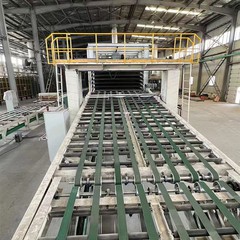
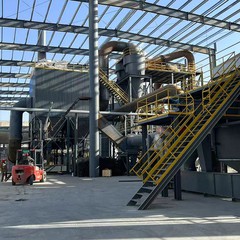
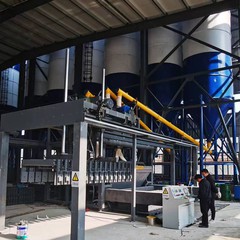
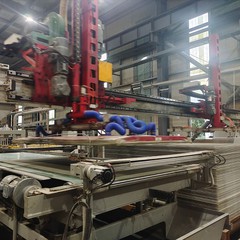
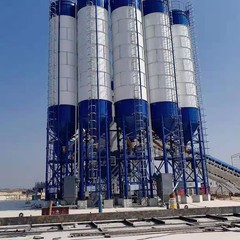



Hey there! I'm a supplier of gypsum board production lines, and today I wanna chat about the cost - effectiveness analysis methods for these lines.
Why Cost - Effectiveness Analysis Matters
First off, let's talk about why we even bother with cost - effectiveness analysis. Running a gypsum board production line ain't cheap. You've got to shell out for raw materials, equipment, labor, and energy. And in a competitive market, you need to make sure every dollar you spend is bringing in as much profit as possible. Cost - effectiveness analysis helps you figure out if your production line is worth the investment and how you can optimize it.
Methods of Cost - Effectiveness Analysis
1. Payback Period
The payback period is one of the simplest ways to analyze cost - effectiveness. It's basically the time it takes for your production line to earn back the money you spent on it. To calculate it, you divide the total investment cost by the annual net cash flow.
Let's say you invest $500,000 in a Semi - automatic Paperless Gypsum Board Production Line. And each year, after covering all the costs, you make a net profit of $100,000. The payback period would be 500,000 / 100,000 = 5 years. A shorter payback period is generally better because it means you're getting your money back faster.
2. Net Present Value (NPV)
NPV takes into account the time value of money. Money today is worth more than the same amount of money in the future because you can invest it and earn interest. To calculate NPV, you estimate all the future cash flows from your production line, discount them back to the present value using a discount rate, and then subtract the initial investment.
If the NPV is positive, it means the production line is expected to generate more value than the initial investment, taking into account the time value of money. For example, if you expect to get cash flows of $120,000 per year for 5 years from a Small Gypsum Board Production Line with an initial investment of $400,000 and a discount rate of 10%, you'd calculate the present value of each cash flow, sum them up, and then subtract the initial investment. If the result is positive, it's a good investment.
3. Benefit - Cost Ratio (BCR)
The BCR is another useful metric. It's calculated by dividing the total present value of benefits by the total present value of costs. A BCR greater than 1 indicates that the benefits outweigh the costs.
For instance, if the present value of the benefits from a Fireproof Gypsum Board Production Line is $600,000 and the present value of the costs is $500,000, the BCR is 600,000 / 500,000 = 1.2. This means for every dollar you spend, you're getting $1.2 in benefits.
Factors Affecting Cost - Effectiveness
1. Raw Materials
The cost and quality of raw materials have a huge impact on cost - effectiveness. Gypsum, paper (if it's a paper - faced board), and additives all need to be sourced at a reasonable price without sacrificing quality. If you can find a reliable supplier who offers good - quality raw materials at a lower cost, it can significantly improve your cost - effectiveness.
2. Energy Consumption
A gypsum board production line uses a lot of energy for processes like heating and mixing. Energy - efficient equipment can reduce your energy bills. You might want to invest in modern, high - efficiency machinery that uses less power without reducing production capacity.
3. Labor Costs
Labor is another major expense. You need to find the right balance between the number of workers and the production volume. Automation can help reduce labor costs in the long run, but it also requires an upfront investment.
Optimizing Cost - Effectiveness
1. Process Optimization
Look at your production process and see if there are any bottlenecks or inefficiencies. Maybe you can streamline the mixing process or reduce the time it takes to dry the boards. Small improvements in the process can add up to big savings over time.
2. Equipment Upgrades
If your equipment is old and inefficient, it might be worth investing in upgrades. Newer equipment often comes with better technology that can improve productivity and reduce costs.
3. Supplier Negotiation
Negotiate with your raw material suppliers to get better prices. Building a long - term relationship with them can also lead to more favorable terms.


Conclusion
Cost - effectiveness analysis is crucial for anyone in the gypsum board production business. By using methods like payback period, NPV, and BCR, you can make informed decisions about your production line investment. And by considering factors like raw materials, energy consumption, and labor costs, you can optimize your cost - effectiveness.
If you're thinking about investing in a gypsum board production line, I'd love to have a chat with you. We can discuss which type of production line suits your needs best and how to make it as cost - effective as possible. Don't hesitate to reach out and start the conversation!
References
- Principles of Engineering Economy, Sullivan, W. G., Wicks, E. M., & Koelling, C. P.
- Cost - Benefit Analysis: Concepts and Practice, Boardman, A. E., Greenberg, D. H., Vining, A. R., & Weimer, D. L.