

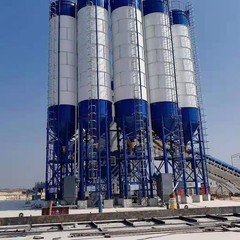



As a reliable gypsum board production line supplier, I understand that installing a gypsum board production line is a complex yet rewarding process. In this blog post, I will guide you through the key steps of installing a gypsum board production line, sharing insights based on our extensive experience in the industry.
1. Site Preparation
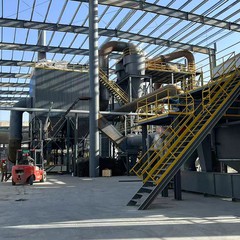
Before installation begins, thorough site preparation is essential. First, select a suitable location for the production line. The site should have sufficient space to accommodate all the equipment, including raw material storage areas, production workshops, and finished product storage spaces. It's also important to ensure that the site has proper ventilation, drainage systems, and access to utilities such as water, electricity, and gas.
The ground should be leveled and reinforced to support the heavy machinery. Conduct a soil test to determine the bearing capacity of the ground. If necessary, use concrete foundations to provide a stable base for the equipment. Additionally, the site should be well-connected to transportation routes for easy delivery of raw materials and distribution of finished products.
2. Equipment Delivery and Inspection
Once the site is ready, the next step is to deliver the equipment. Our company ensures that all Gypsum Board Manufacturing Machine are carefully packed and transported to the site in good condition. Upon arrival, a detailed inspection should be carried out.
Check the equipment for any visible damage during transportation. Compare the delivered items with the packing list to ensure that all components are present. This includes checking the main production machines, conveyors, mixers, and control systems. If any issues are found, contact our technical support team immediately for assistance.
3. Equipment Installation
Foundation Installation
Start with the installation of the equipment foundations. Follow the manufacturer's instructions precisely to ensure that the foundations are installed at the correct positions and heights. The foundations are usually made of concrete, and they need to be properly cured before the equipment can be mounted on them.
Main Equipment Installation
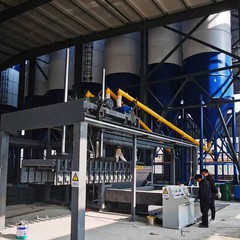
Begin with the installation of the major production equipment, such as the mixer, forming machine, and drying kiln. Each piece of equipment should be aligned carefully according to the layout plan. Use precision measuring tools to ensure accurate alignment, which is crucial for the smooth operation of the production line.
Connect the equipment using the appropriate pipes and cables. The pipes are used for the flow of raw materials and additives, while the cables are for electrical and control connections. Make sure all connections are tight and leak - free.
Conveyor System Installation
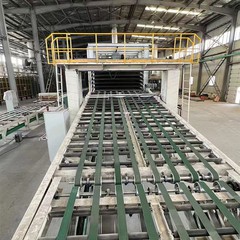
Install the conveyor system to transport the gypsum board between different processing stations. The conveyors should be installed at the correct angles and heights to ensure smooth material flow. Adjust the tension of the conveyor belts to prevent slipping and ensure stable operation.
Control System Installation
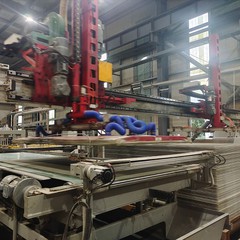
The control system is the brain of the gypsum board production line. Install the control panels and sensors at the designated locations. Connect them to the main equipment and configure the control parameters according to the production requirements. Test the control system to ensure that it can accurately monitor and control the operation of the entire production line.
4. Electrical and Piping Connections
Electrical Connections
Electrical connections are a critical part of the installation process. Hire qualified electricians to carry out the electrical work. Connect all the equipment to the power supply, following the electrical wiring diagrams provided by the manufacturer. Install appropriate electrical protection devices, such as circuit breakers and fuses, to ensure the safety of the equipment and operators.
Piping Connections
Install the pipes for the supply of raw materials, such as gypsum powder, water, and additives. The pipes should be made of suitable materials that can resist corrosion and wear. Ensure that all pipe connections are sealed properly to prevent leakage. Install valves and flow meters to control the flow of materials accurately.
5. Testing and Commissioning
Single - Equipment Testing
After the installation is completed, conduct single - equipment testing. Start each piece of equipment separately and check its operation. Monitor parameters such as motor speed, temperature, and pressure. Look for any abnormal noises, vibrations, or malfunctions. If any issues are found, troubleshoot and repair them immediately.
Integrated System Testing
Once all the single equipment has been tested successfully, conduct integrated system testing. Run the entire production line from start to finish to simulate the actual production process. Check the coordination between different equipment and the overall production efficiency. Adjust the control parameters as needed to optimize the performance of the production line.


Product Quality Testing
During the commissioning process, produce a small batch of gypsum boards and conduct quality testing. Check the physical properties of the gypsum boards, such as thickness, density, strength, and fire resistance. Compare the test results with the quality standards to ensure that the production line can produce high - quality gypsum boards.
6. Operator Training
Before the production line is put into full - scale production, provide comprehensive training to the operators. Our company offers professional training programs that cover equipment operation, maintenance, troubleshooting, and safety procedures.
The training should include both theoretical knowledge and practical hands - on experience. Operators should learn how to start and stop the equipment, adjust the production parameters, and perform routine maintenance tasks. They should also be familiar with safety regulations and emergency response procedures to ensure a safe working environment.
7. Maintenance Plan
Develop a detailed maintenance plan for the gypsum board production line. Regular maintenance is crucial to ensure the long - term stable operation of the equipment and to extend its service life.
The maintenance plan should include daily, weekly, monthly, and annual maintenance tasks. Daily maintenance may include checking the equipment for visible damage, cleaning the equipment, and lubricating the moving parts. Weekly maintenance may involve inspecting the electrical connections and control systems. Monthly and annual maintenance tasks may include more in - depth inspections, parts replacement, and calibration of the equipment.
It's important to have a stock of spare parts on - site to minimize downtime in case of equipment failures. Our company can provide high - quality spare parts for all our Gypsum Board Production Line Equipment and offer technical support for spare part replacement.
Our Product Lines
We offer a variety of gypsum board production lines to meet different customer needs. Our Lightweight Gypsum Board Production Line Production Line is designed to produce lightweight gypsum boards, which are popular in the construction industry for their ease of handling and installation.
Our Durable Gypsum Board Line is capable of producing high - strength and long - lasting gypsum boards, which are suitable for demanding construction projects.
If you are looking for a more advanced and efficient solution, our Automatic Paper - based Gypsum Board Production Line offers automated production processes, reducing labor costs and improving production efficiency.
Conclusion
Installing a gypsum board production line is a multi - step process that requires careful planning, precise installation, and thorough testing. As a professional gypsum board production line supplier, we are committed to providing high - quality equipment and comprehensive technical support throughout the installation process.
If you are interested in purchasing a gypsum board production line or have any questions about installation and operation, please feel free to contact us. We look forward to discussing your specific requirements and providing you with the best solutions for your business.
References
- Industry standards for gypsum board production line installation
- Manufacturer's installation and operation manuals for gypsum board production equipment
- Previous installation projects and case studies in the gypsum board production industry