




Hey there! As a supplier of gypsum board production lines, I've seen firsthand the challenges and opportunities in this industry. In this blog post, I'll share some tips on how to improve the efficiency of a gypsum board production line.
1. Optimize the Raw Material Handling
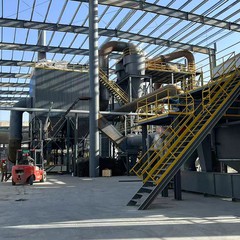
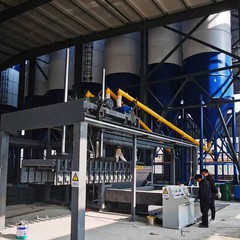
One of the first steps to improving efficiency is to optimize the handling of raw materials. Gypsum, the main ingredient in gypsum boards, needs to be stored and transported properly. Make sure your storage facilities are well - ventilated and dry to prevent the gypsum from clumping. Use conveyor belts or automated systems to move the raw materials from storage to the production area. This reduces manual labor and speeds up the process.
Another aspect is to source high - quality raw materials. Good quality gypsum will not only result in better - quality boards but also reduce the chances of production disruptions due to impurities. You can work closely with your suppliers to ensure a consistent supply of high - grade gypsum.
2. Upgrade the Equipment
Investing in modern and efficient equipment is crucial. For example, consider upgrading your mixing equipment. A high - speed mixer can blend the gypsum, water, and additives more thoroughly and quickly, leading to a more uniform product.
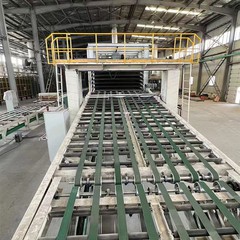
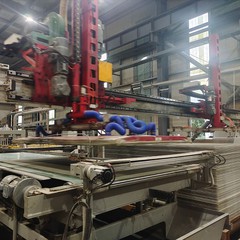
Also, look into the automation of your production line. Automated cutting, stacking, and packaging machines can significantly increase the production speed. For instance, our Semi - automatic Paperboard Gypsum Board Production Line offers a good balance between manual and automated processes, allowing for greater flexibility and efficiency.
3. Staff Training
Your employees are the heart of your production line. Providing them with proper training is essential. Train them on how to operate the equipment safely and efficiently. This includes understanding the optimal settings for each machine, as well as how to troubleshoot common problems.
Regular training sessions can also keep your staff updated on the latest production techniques and safety protocols. Encourage your employees to share their ideas for improving the production process. They are often the ones on the front line and may have valuable insights.
4. Quality Control
Implementing a strict quality control system is vital for efficiency. By catching defects early in the production process, you can avoid wasting time and resources on producing sub - standard boards. Set up quality control checkpoints at various stages of the production line, such as after mixing, forming, and drying.
Use advanced testing equipment to measure the density, strength, and other properties of the gypsum boards. This data can help you make adjustments to the production process in real - time. For example, if the boards are too dense, you can adjust the water - to - gypsum ratio in the mixing stage.
5. Maintenance and Monitoring
Regular maintenance of your production equipment is a must. Create a maintenance schedule and stick to it. This includes cleaning, lubricating, and inspecting the machines. By preventing breakdowns, you can avoid costly downtime.
In addition, use monitoring systems to keep track of the production process. Sensors can be installed on the equipment to monitor parameters such as temperature, pressure, and speed. This data can be used to identify potential issues before they become major problems.
6. Streamline the Production Process
Look for ways to streamline the production process. Eliminate any unnecessary steps or bottlenecks. For example, if there are long waiting times between different stages of the production line, find ways to reduce them. This could involve adjusting the speed of the conveyor belts or re - arranging the layout of the production area.
Consider the production flow from start to finish. Make sure that the materials move smoothly through the line without any back - and - forth movements. This can save a significant amount of time and energy.
7. Energy Efficiency
Energy costs can be a major expense in a gypsum board production line. Implement energy - saving measures such as using energy - efficient motors, optimizing the heating and cooling systems, and installing insulation in the production area.
For example, using a heat recovery system can capture the heat generated during the drying process and reuse it, reducing the overall energy consumption. This not only saves money but also makes your production line more environmentally friendly.
8. Product Diversification
Offering a variety of gypsum board products can increase your market share and efficiency. For example, our Sound Insulation Gypsum Board Production Line and Lightweight Gypsum Board Production Line Production Line allow you to produce different types of boards to meet the diverse needs of your customers.
By diversifying your product range, you can make better use of your production capacity. For instance, during slow periods for one type of board, you can switch to producing another type.
Conclusion
Improving the efficiency of a gypsum board production line requires a comprehensive approach. From optimizing raw material handling to upgrading equipment, training staff, and implementing quality control measures, every aspect plays a crucial role.


If you're looking to enhance the efficiency of your gypsum board production line, we're here to help. We offer a range of high - quality production lines that can be customized to meet your specific needs. Contact us to discuss your requirements and let's work together to take your production to the next level.
References
- Industry reports on gypsum board production efficiency
- Technical manuals of gypsum board production equipment