

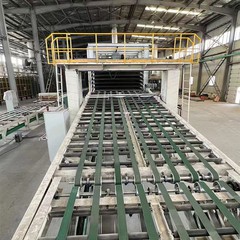
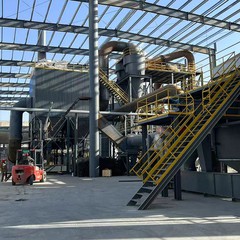
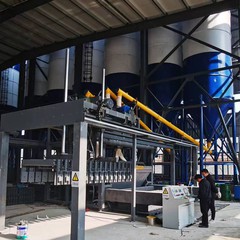
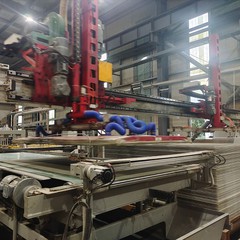
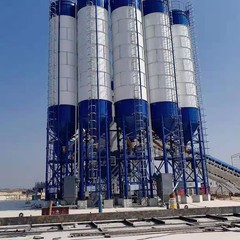



As a supplier of high strength gypsum block production lines, ensuring the stability of product quality is of utmost importance. In the construction industry, high strength gypsum blocks are widely used due to their excellent performance, such as high strength, good fire - resistance, and environmental friendliness. A stable product quality not only meets the needs of customers but also enhances the reputation and competitiveness of our production line in the market. In this blog, I will share some key aspects on how to ensure the stability of the product quality of a high strength gypsum block production line.
1. Raw Material Quality Control
The quality of raw materials is the foundation for producing high - quality gypsum blocks. Gypsum, as the main raw material, should be carefully selected. High - purity gypsum with consistent chemical composition is preferred. We need to establish strict incoming inspection procedures for gypsum. This includes testing the content of calcium sulfate dihydrate or hemihydrate, which can significantly affect the final strength and setting time of the gypsum blocks.
In addition to gypsum, other additives such as fibers and retarders also play important roles. Fibers can enhance the tensile strength and crack resistance of gypsum blocks. The type, length, and dosage of fibers need to be precisely controlled. Retarders are used to adjust the setting time of the gypsum slurry. Incorrect dosage of retarders can lead to problems such as slow setting or premature hardening. Therefore, suppliers should cooperate closely with reliable raw material providers and conduct regular quality audits.
2. Equipment Maintenance and Upgrades
The performance and reliability of the production line equipment directly affect the quality stability of gypsum blocks. Regular maintenance of the equipment is essential. For example, the mixing system is a crucial part of the production line. The mixer should be cleaned regularly to prevent the accumulation of residual gypsum, which can affect the uniformity of the next batch of slurry mixing.
The molds used for forming the gypsum blocks also need to be maintained properly. Any damage or deformation of the molds can lead to irregularly shaped or low - strength gypsum blocks. We should check the molds regularly for wear and tear and replace them in time if necessary.
Moreover, with the development of technology, it is necessary to upgrade the production line equipment periodically. Newer equipment often has better control systems and higher precision, which can improve the quality and stability of product production. For instance, our Heavy Duty Gypsum Block Line is equipped with advanced control technology that can accurately control the mixing ratio, temperature, and pressure during the production process.
3. Process Parameter Optimization
Optimizing process parameters is a key step in ensuring product quality stability. The mixing process is the first step where the parameters need to be strictly controlled. The mixing time, speed, and the order of adding raw materials all have an impact on the quality of the gypsum slurry. Insufficient mixing time may result in uneven distribution of additives, while excessive mixing may cause the slurry to lose its workability.
The pouring process also requires careful parameter setting. The pouring speed and height should be adjusted according to the size and design of the molds. Incorrect pouring parameters can lead to air bubbles in the blocks, which will reduce the strength and uniformity of the products.
During the curing process, temperature and humidity are two critical factors. High strength gypsum blocks need to be cured under appropriate conditions to achieve their optimal strength. We can use curing chambers with precise temperature and humidity control to ensure consistent curing conditions for each batch of products. Our Full - automatic High - strength Gypsum Block Production Line is designed to precisely control these process parameters, ensuring the stability of product quality.
4. Quality Inspection and Monitoring
Establishing a comprehensive quality inspection and monitoring system is crucial for ensuring the stability of product quality. At each stage of the production process, from raw material input to the final product output, there should be corresponding inspection procedures.
For raw materials, we can use chemical analysis and physical property testing methods to ensure their compliance with the required standards. During the production process, in - process inspection can be carried out to monitor the quality of the semi - finished products. For example, sampling the gypsum slurry to check its density and setting time.
For the final gypsum blocks, a series of tests should be conducted, including strength testing, dimensional accuracy measurement, and water absorption rate testing. Any non - compliant products should be removed from the production line immediately. Continuous monitoring of the production process can also help us identify potential quality problems in time and take corrective actions. Our Multi - function High - strength Gypsum Block Production Line is equipped with real - time monitoring devices to ensure that every block meets the quality standards.
5. Staff Training and Management
The skills and responsibilities of the production staff have a direct impact on product quality. We should provide regular training for our employees to ensure that they are familiar with the production process, equipment operation, and quality control requirements. New employees should receive comprehensive on - the - job training to quickly master the necessary skills.


In addition to technical training, we also need to strengthen staff management. Establish a clear job responsibility system and performance evaluation system. Encourage employees to be responsible for product quality and reward those who contribute to quality improvement. A well - trained and responsible workforce is an important guarantee for the stability of product quality.
6. Continuous Improvement
Product quality improvement is a continuous process. We should collect feedback from customers, analyze production data, and summarize experience regularly. Based on this information, we can identify areas for improvement in the production process and raw material selection.
For example, if customers report that the gypsum blocks have a problem with surface smoothness, we can analyze the production process to find out whether it is caused by the mold condition, the mixing process, or other factors. By continuously optimizing the process and improving the quality control system, we can further enhance the stability of product quality. Our High - strength Load - bearing Gypsum Block Production Line is continuously improved according to market feedback and technological development to ensure the best product quality.
Conclusion
Ensuring the stability of the product quality of a high strength gypsum block production line requires a comprehensive approach, including raw material quality control, equipment maintenance and upgrades, process parameter optimization, quality inspection and monitoring, staff training and management, and continuous improvement. As a professional high strength gypsum block production line supplier, we are committed to providing high - quality production lines and technical support to help our customers produce high - quality gypsum blocks.
If you are interested in our high strength gypsum block production lines, such as the Precision Gypsum Block Line, please feel free to contact us for further discussions and procurement negotiations. We are looking forward to cooperating with you to achieve mutual success.
References
- Smith, J. (2018). Advanced Construction Materials: Gypsum - Based Products. Building Materials Journal, 25(3), 120 - 135.
- Johnson, A. (2019). Quality Control in Gypsum Block Manufacturing. Manufacturing Industry Review, 32(4), 89 - 101.
- Brown, R. (2020). Technology Trends in High - Strength Gypsum Block Production. Construction Technology Magazine, 45(2), 67 - 80.