

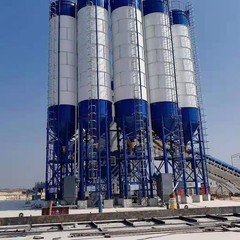





Shineye Mach Co., Ltd. is one of the leading manufacturers and suppliers of Fiber Cement Board Processing Line in China. If you're going to buy the newest Fiber Cement Board Processing Line made in China, welcome to get quotation from our factory. All customized products are with high quality and competitive price.
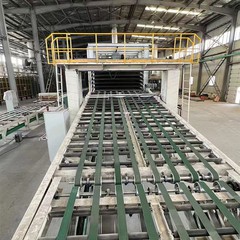
A complete production system for fiber cement board manufacturing processes raw materials-primarily Portland cement, cellulose fiber, and quartz sand-into finished fiber cement boards.
The system produces boards in standard sizes of 1220×2440 mm and 1200×2400 mm, with thickness ranging from 4 to 25 mm, making them suitable for exterior cladding, interior wall linings, flooring, roofing, and other structural and decorative applications.
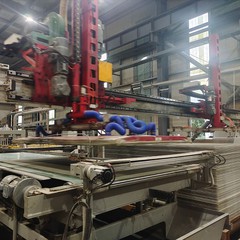
Engineered with energy-efficient drying systems, automated material handling, and centralized controls, the line reduces manual labor by over 50% compared to traditional lines while ensuring consistent product quality.
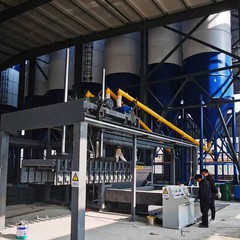
At the core of the system is a fully integrated production workflow. The raw materials are first precisely weighed and mixed according to a formulated recipe. Cellulose fiber provides reinforcement and flexibility, quartz sand ensures dimensional stability and hardness, while Portland cement acts as the primary binding agent to give the boards their structural strength. The mixed slurry is then formed into flat sheets through a high-precision forming machine, followed by a controlled curing process that allows the boards to achieve their designed mechanical properties. After curing, the boards undergo a drying stage to remove excess moisture, then proceed to surface treatment-such as sanding, coating, or texturing-to meet specific application requirements.
The finished fiber cement boards are durable, moisture-proof, fire-retardant, rot-resistant, and insect-proof. They also provide excellent thermal and acoustic insulation. Meeting EN 12467 bending strength requirements, these boards are ideal for a broad range of applications, including exterior wall cladding and thermal insulation facade systems, interior wall decoration, flooring for loft interlayers and container houses, roofing sheets, subway and tunnel linings, baseboards, outdoor furniture, and thinner backing boards for stone veneer. Whether used in residential, commercial, or infrastructure projects, the boards deliver long service life with minimal maintenance. To achieve these superior product qualities, every stage of the Fiber Cement Board Processing Line is designed for precision and consistency, from raw material handling to final surface finishing.

Key Features – Solving Your Production Challenges
Solving dust and pollution issues
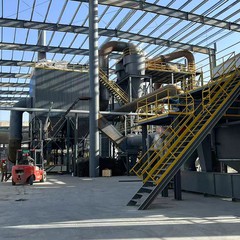
Traditional fiber cement production often generates significant dust, affecting worker health and workshop cleanliness. Our line is equipped with sealed material handling systems and efficient dust collection units, minimizing airborne particles and creating a safer, cleaner working environment.
01
Reducing labor costs
02
Improving board density consistency
03
Stabilizing the curing process
04
Technical Specifications
| Parameter | Details |
|---|---|
| Raw Materials | Cellulose Fiber, Quartz Sand, Portland Cement |
| Standard Size | 1220×2440 mm / 1200×2400 mm |
| Maximum Width | 1220 mm |
| Maximum Length | 3000 mm |
| Thickness | 4-25 mm |
| Density | 1.2-1.7 g/cm³ |
| Output | 5 million (annual reference) |
| Main Characteristic | Environmentally friendly materials |
Parameter Explanations:
Raw Materials
A balanced formulation combining organic fiber reinforcement, mineral filler for dimensional stability, and cementitious binder for structural strength. All materials are non-toxic and asbestos-free.
Standard Size
Industry-standard dimensions compatible with most building codes and construction practices, allowing for efficient installation and minimal on-site cutting waste.
Maximum Width (1220 mm)
Provides sufficient coverage for large-area paneling while maintaining manageable weight for handling and installation.
Maximum Length (3000 mm)
Supports extended panel lengths to reduce joints and seams in facade and roofing applications, improving both aesthetics and weather tightness.
Thickness (4–25 mm)
Suitable for a wide range of applications: thinner boards (4–8 mm) for interior wall linings and ceiling panels, medium thickness (8–15 mm) for exterior cladding and flooring, and thicker boards (15–25 mm) for heavy-duty structural uses such as roofing and load-bearing partitions.
Density (1.2–1.7 g/cm³)
Offers an optimal balance between lightweight handling and mechanical strength. Lower density boards are easier to cut and transport, while higher density boards provide superior impact resistance and durability.
Annual Output (5 million boards, reference)
Based on standard 1220×2440 mm boards with a 24/7 continuous operation schedule. Actual output may vary depending on board thickness, product specifications, and production line configuration.
Main Characteristic (Environmentally friendly materials)
The production process generates minimal waste, and the boards themselves are recyclable. No asbestos, formaldehyde, or other harmful substances are used, making the products safe for both installers and building occupants.
Production Process
The line follows a complete sequence: raw material preparation → board forming → drying → surface treatment → finished product.

Performance & Applications
The boards are strong, tough, waterproof, fireproof, rot-resistant, and insect-proof. They also provide good thermal insulation and acoustic performance. With a long service life and minimal maintenance needs, they are suitable for:
Exterior decoration panels
Integrative facade panels for exterior wall thermal insulation
Interior wall decoration panels
Flooring for loft interlayer, container house, light steel villa
Subway, tunnel, baseboard, outdoor furniture
Roofing sheets
Thinner lining board for stone

About the Supplier
Hebei Xiangyi Mechanical Co., Ltd. was established in 2002 as a professional manufacturer of building material equipment. The company has a 25,000 m² production base with over 100 employees and 50+ sets of processing equipment. It is certified with CE and ISO 9001.
Over the past 20+ years, the company has built a solid R&D team dedicated to energy-efficient and environmentally friendly solutions. Its products are exported to more than 60 countries and regions, supported by a strong after-sales network.

Our Services

From initial design to final handover, we support you at every stage. We offer complete production line design, equipment supply, installation guidance, and technical training. Our after-sales team provides prompt spare parts delivery and troubleshooting support to keep your line running without interruption.
FAQ
1. What is fiber cement board used for?
Fiber cement boards are versatile building materials used in a wide range of construction applications. They serve as exterior wall cladding and facade panels, providing both aesthetic appeal and weather protection. In interior spaces, they are used for wall linings, ceiling panels, and decorative finishes. Their moisture resistance makes them ideal for wet areas such as bathrooms and kitchens. Additionally, they are widely employed as flooring underlayment, roofing sheets, tunnel and subway linings, baseboards, and outdoor furniture. The boards also work well as backing panels for stone veneer and as components in prefabricated modular construction systems. Their durability, fire resistance, and low maintenance requirements make them suitable for residential, commercial, and infrastructure projects worldwide.
2. What raw materials are required?
The production of fiber cement boards requires three primary raw materials: Portland cement, cellulose fiber, and quartz sand. Portland cement serves as the primary binding agent, providing the boards with their structural strength and durability. Cellulose fiber, typically derived from recycled paper or wood pulp, acts as reinforcement, improving the boards' flexibility, impact resistance, and crack prevention. Quartz sand functions as a mineral filler, ensuring dimensional stability, hardness, and a smooth surface finish. Additional additives may include small amounts of water-repellent agents or color pigments for specific performance or aesthetic requirements. All materials used are non-toxic, asbestos-free, and environmentally safe, meeting international health and safety standards.
3. How long is the production cycle?
The complete production cycle from raw material input to finished board typically ranges from 8 to 24 hours, depending on the board thickness, product specifications, and the specific configuration of the production line. The process begins with material weighing and mixing, which takes approximately 1 to 2 hours. Board forming and pressing follow, requiring about 30 minutes to 1 hour. The curing stage is the most time-consuming, lasting between 4 and 12 hours, as it requires controlled temperature and humidity conditions to allow the cement to properly hydrate and achieve design strength. Drying and surface treatment add another 2 to 4 hours. Thicker boards generally require longer curing and drying times to ensure uniform quality and dimensional stability.
4. What is the production capacity per day?
Daily production capacity varies based on board thickness, line configuration, and operating schedule. For standard 1220×2440 mm boards with 24-hour continuous operation, a typical line produces approximately 8,000 to 15,000 boards per day, equating to an annual reference output of around 5 million boards. Thinner boards (4–8 mm) can achieve higher output due to shorter curing and drying cycles, while thicker boards (15–25 mm) require longer processing times, reducing daily throughput. Capacity also depends on factors such as raw material supply consistency, equipment maintenance, and operator efficiency. Our engineering team works with each client to configure the line for optimal output based on their specific product mix and production goals.
5. Is this line fully automatic?
Yes, the line is designed with a high degree of automation to minimize manual labor and ensure consistent product quality. The system features centralized control interfaces that allow a single operator to monitor and manage the entire production process-from raw material weighing and mixing to board forming, curing, drying, and surface treatment. Automated material handling systems transport raw materials and finished boards between stages, reducing manual intervention and the risk of human error. Sensors and feedback loops continuously adjust process parameters such as temperature, pressure, and moisture levels to maintain optimal conditions. While the line is fully automated, we also provide comprehensive training to your team, ensuring they can operate, maintain, and troubleshoot the system with confidence.
6. What after-sales support do you provide?
We provide full after-sales care, including installation guidance, technical support, and spare parts supply. Our team ensures your production line runs smoothly and efficiently.
7. What is a fiber cement board processing line?
This production system is a complete solution for manufacturing fiber cement boards. It includes raw material preparation, forming, drying, and surface treatment. The boards produced are fireproof, waterproof, sound-insulating, and high-strength. The line supports standard sizes 1220×2440 mm and custom specifications.
8. How does the production process work?
The process starts with raw materials (cellulose fiber, quartz sand, Portland cement) being mixed and formed into boards. The boards are then dried and finished. Our factory provides full production line design and services to ensure efficient operation.
9. How do these boards compare with traditional materials?
Fiber cement boards offer superior fire resistance, waterproofing, and durability compared to traditional wood or gypsum boards. They are also lightweight, easy to cut and install, and do not contain asbestos or toxic substances.
10. What applications are suitable for these boards?
The boards are suitable for exterior and interior wall panels, flooring, roofing, subway and tunnel lining, baseboards, outdoor furniture, and decorative applications. They provide long service life with minimal maintenance.
Contact
Ready to get started? Send us your production requirements and receive a customized quote within 24 hours. Whether you are planning a new production facility or upgrading an existing one, our Fiber Cement Board Processing Line can be tailored to meet your specific capacity and budget requirements.
Jessica Li
Our address
North of Dongzicheng Village, Circular Economy Industrial Zone, Jinzhou City, Hebei Province, China
Phone Number
+86 18132648037
xiangyijixielucia@yeah.net
