

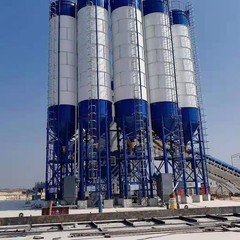



If you’ve ever worked with construction materials, you know special mortar isn’t your average cement mix. It’s tailored stuff—waterproof, self-leveling, thermally insulating—each with a specific job on a job site. And the backbone that keeps these special mortars consistent, efficient, and easy to use? The feeding system of a special mortar mixing plant. As someone who’s supplied these plants for years, I’ve seen first-hand how a solid feeding system isn’t just part of the machine—it’s the reason your mortar turns out right every time.
Let’s start with the basics: why special mortar needs a custom feeding system. Regular mortar is mostly cement, sand, and water. But special mortar? You’ve got additives, fine aggregates, sometimes lightweight materials like perlite or fiber. Each component has its own density, flow rate, and required ratio. Mess up the feeding, and your mix is either too thick, too weak, or doesn’t perform as promised. That’s where a well-designed feeding system comes in—it’s the control center that gets every ingredient to the mixer at exactly the right time, in exactly the right amount.
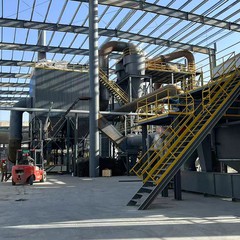
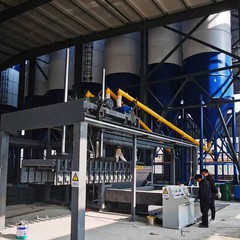
Let’s break down how these feeding systems work, step by step. First, there’s the raw material storage. You can’t just dump sand or additives on the ground and scoop them in—contamination is a huge risk. So most plants use separate silos, bins, or hoppers for each ingredient. For dry powders like cement or polymer additives, you get sealed silos with dust collectors. For liquids (like latex modifiers or water-based additives), you have insulated tanks to keep them from separating. Even lightweight aggregates for thermal insulation mortar get their own special hoppers—they’re bigger, so the feeding system has to handle their lower bulk density without creating dead spots where material gets stuck.


Next, the metering part. This is where the magic (and the precision) happens. You’ve got two main types of metering: volumetric and gravimetric. Volumetric uses flow control devices like screw conveyors or vibratory feeders to move a set amount of material per minute. It’s fast, good for bulk ingredients like sand, but not as precise for small additives. Gravimetric uses load cells to weigh each component as it’s added to the mixer. That’s the gold standard for special mortar—you get accuracy within 0.5% for every ingredient, which is non-negotiable for products like self-leveling mortar that need consistent flow.
Wait, let’s talk about different types of special mortar, because their feeding systems are adjusted to their needs. Waterproof mortar, for example, needs a super precise dosage of waterproofer additives—too much and it’s brittle, too little and it leaks. That’s why our Waterproof Mortar Mixing Plant uses a combination of gravimetric weighing for the main mix and a micro-feeder for the waterproof additive, which doses in small, exact amounts. No more guessing with scoops or batch errors.
Then there’s thermal insulation mortar. That stuff uses lightweight aggregates like expanded polystyrene (EPS) beads or perlite—super low density, so you have to feed them gently to avoid breaking them. If you crush the EPS, your insulation value drops. So the feeding system for a Special Mixing Plant for Thermal Insulation uses pneumatic conveyors instead of screws, because they move material with air, not mechanical parts that could break the beads. It’s slower, but way more gentle on the lightweight aggregates.
Self-leveling mortar is another beast. It needs a very specific water-to-powder ratio, and any inconsistency there will make it not level right. So the Self-leveling Mortar Mixing Plant’s feeding system has separate, calibrated lines for dry powder, water, and liquid modifiers, all controlled by a PLC (programmable logic controller) that adjusts in real time if it detects a weight or flow issue. You don’t have to have an operator watching it 24/7— the PLC keeps everything on track.
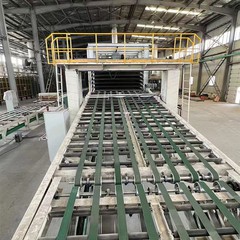
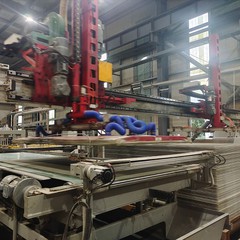
Now, let’s talk about full-automatic systems, because that’s what most contractors want these days. No one has time to manually feed each ingredient, especially on big projects. A Full-automatic Special Mortar Mixing Plant’s feeding system is fully integrated: from the storage silos, the metering devices talk to the PLC, which loads the exact recipe into the mixer. Once the mix is done, it can even feed the finished mortar into bags or silos for transport. The only manual part is refilling the storage bins—everything else is automated, which cuts down on labor costs and human error.
But wait, feeding systems aren’t just about precision—they’re also about reliability. I’ve had clients come to me with old plants that have screw conveyors that jam, or hoppers that build up material, leading to inconsistent batches. That’s why good feeding systems have features like anti-bridging devices—small vibrators on hoppers that keep material from clumping or sticking. For fine powders like cement, some plants use air slides, which are sloped beds with air pushed through, so the powder flows evenly without bridging. It’s a small part, but it makes a huge difference in downtime.
Another thing to consider is customization. Every job is different, so a one-size-fits-all feeding system won’t work. Some clients need to make multiple types of special mortar on the same plant—say waterproof one week, thermal insulation the next. So the feeding system has modular components, so you can switch recipes quickly without recalibrating everything. That flexibility is key for small to mid-sized contractors who don’t need a dedicated plant for each mortar type.
Let’s get into some real-world stuff. Last year, I worked with a building company that was struggling with their old self-leveling mortar batches—they were getting complaints that the floor was uneven. They switched to our Self-leveling Mortar Mixing Plant, and one of the main upgrades was the feeding system’s gravimetric meters. Before, they were using volumetric feeders that were off by 2-3% on the powder, which messed up the water ratio. With the new system, their batches were consistent, and they haven’t had a leveling issue since. That’s the kind of impact a good feeding system has.
What about maintenance? Feeding systems need regular checks, but if they’re designed right, it’s not a hassle. Screw conveyors need their bearings checked, load cells need to be calibrated periodically, and hoppers need to be cleaned to prevent cross-contamination between different mortar types. Most modern feeding systems have diagnostic alerts—if a feeder is running slow or a load cell is off, the PLC sends a notification, so you can fix it before it causes a bad batch. No more finding out after 10 batches that something’s wrong.
Wait, let’s not forget about environmental factors. Special mortar often has dust from fine additives, so the feeding system has dust collection systems built in. That’s not just for compliance— it’s better for the operators too. The pneumatic conveyors I mentioned earlier also help with dust control because the material is sealed in the air stream. For liquid additives, closed tanks mean no spills, which is important for jobs sites near rivers or other sensitive areas.
Now, let’s tie this all together. The feeding system of a special mortar mixing plant isn’t just a bunch of hoppers and screws—it’s the core of how you get high-quality, consistent mortar. Whether you’re making waterproof mortar for a basement, thermal insulation mortar for an energy-efficient building, self-leveling mortar for a commercial floor, or a custom mix for a specialty project, the feeding system has to be tailored to that mortar’s specific needs.
If you’re in the market for a special mortar mixing plant, don’t just look at the mixer—ask about the feeding system. How precise is the metering? Can it handle the specific ingredients you use? Is it automated to cut down on labor? Our Full-automatic Special Mortar Mixing Plant is built with feeding systems calibrated for all the common special mortars, with modular designs so you can adapt it to your projects. We also offer the Waterproof Mortar Mixing Plant, the Special Mixing Plant for Thermal Insulation, and the Self-leveling Mortar Mixing Plant, each with feeding systems optimized for their exact application.
If you’re tired of inconsistent batches, high downtime, or feeding systems that can’t keep up with your project demands, reach out—we can walk you through how our feeding systems work, answer any questions you have, and help you find the right plant for your needs. No sales pitches, just honest info based on years of working with construction teams.
References
- American Society for Testing and Materials (ASTM) C94, Standard Specification for Ready-Mixed Concrete (relevant to mortar ingredient control)
- International Association of Construction Equipment Manufacturers (ACEMA), Guidelines for Special Mortar Mixing Plant Design
- Journal of Construction Materials Engineering, "Precision Feeding Systems for Specialty Construction Mortars" (2021)
- National Ready Mixed Concrete Association (NRMCA), Best Practices for Mortar Mixing and Handling