

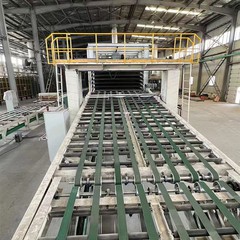
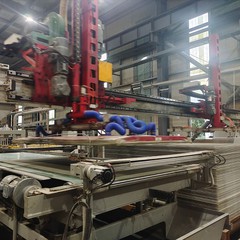




Shineye Mach Co., Ltd. is one of the leading manufacturers and suppliers of Side-push Automatic Packing Machine in China. If you're going to buy the newest Side-push Automatic Packing Machine made in China, welcome to get quotation from our factory. All customized products are with high quality and competitive price.

Side-push Automatic Packing Machine – An Engineer's Guide
Most packing machines drop products straight down into a carton. That works fine for heavy, stable items like metal cans. But for glass bottles? Or for cartons with flimsy flaps? Drop packing causes jams, label scuffs, and broken necks.
The Side-push Automatic Packing Machine does the opposite. It keeps the product on a horizontal plane, groups it into a full row, then pushes the entire row sideways into an open carton. No falling. No dropping. Just a controlled, low-impact side transfer.
In this guide, I will walk you through how this machine actually performs on a real production floor – not just a spec sheet.
Why Side-Push Instead of Top-Drop?
Drop packers rely on gravity. The product falls freely from a height into the carton. If the carton is not perfectly aligned, or if a flap is hanging loose, you get a jam. If the product is glass, you get chipped rims. If the product is a lightweight can, it may bounce out.
Side-push eliminates the fall. The carton is opened with its side opening facing a pusher plate. Pneumatic fingers press the top flaps flat against the carton walls. The product never drops – it slides in horizontally. The result is lower breakage, fewer jams, and less downtime.
A Vietnamese beer plant switched from drop packing to this side-push machine. Their breakage on glass bottles dropped from 1.8% to 0.4% in the first month. Jams went from three per shift to one per week.
What the Machine Actually Does (Cycle Breakdown)
Here is what happens in each 2.5 to 3.5 second cycle when the machine runs at 18–25 cases per minute.
Step 1 – Carton erection.
A flat carton is pulled from a vertical magazine by vacuum cups, opened into a square tube, and positioned so its side opening faces the pusher. Four pneumatic fingers then press the top flaps against the carton sides. The entry path is completely clear.
Step 3 – Side push.
Once the correct number of products (16, 20, or 24 cans/bottles) is confirmed, a servo-driven pusher activates. The pusher plate – made from 10mm thick SUS304 stainless steel with a mirror finish – slides forward on linear rails, pushing the entire row sideways into the carton.

Step 2 – Product grouping.
Containers arrive in single file. Servo-controlled lane dividers split them into separate channels. A sensor array counts each product as it arrives on a stationary grouping platform. The platform is stainless steel, wear-resistant, and polished to reduce friction.
Step 4 – Carton release and seal.
The filled carton moves down to a sealer. The next empty carton moves into position. The cycle repeats.
Technical Summary
|
Parameter |
Value |
|
Cycle speed |
18 – 25 cases per minute |
|
Container types |
Tin cans, aluminum cans, glass bottles, Tetra Pak bricks |
|
Typical products |
Beer, juice, eight-treasure porridge, walnut milk, water |
|
Pack configurations |
16, 20, or 24 cans – one-button changeover |
|
Carton opening |
Automatic side opening with flap hold-down |
|
Pusher drive |
Servo motor + ground ball screw |
|
Control |
PLC with 7-inch touch screen |
|
Fault display |
Touch screen shows exact jam location |
|
Auto repositioning |
One-button return after misalignment |
|
Power |
380V, 50/60Hz |
|
Air pressure |
0.6 ± 0.05 MPa constant |
|
Machine size (L×W×H) |
5000 × 1500 × 950 mm |
|
Weight |
~2000 kg |
The Three Most Important Design Details
01
1. The flap hold-down system.
This is the single biggest improvement over older side-push machines. On old designs, carton flaps often fall into the product path mid-push. The product hits the flap, stops, and the pusher keeps going – crushing cans. Our pneumatic fingers hold the flaps flat against the carton sides for the entire push. Customers report that flap-related jams drop by 80-90% after switching.
02
2. The pusher plate material and finish.
The plate is 10mm SUS304 stainless steel, polished to a mirror finish. Why mirror finish? Because any roughness creates friction. Friction slows the push. Slower push means lower case-per-minute rates. The mirror finish also prevents label scuffing on printed cans.
03
3. Integrated grouping station.
Most packing machines sort products on one station, then transfer them to a second station for packing. That takes floor space and adds conveyor sections where products can tip over. This machine groups and packs on the same platform. The total height is only 950mm – it fits under most existing conveyors.
Application Notes – Where This Machine Excels
This design works best for products that are stable on their base and will not tip when pushed. Specific applications we have installed:
The machine does NOT work well for tall, narrow bottles with small bases (e.g., 250ml glass soda bottles). Those require a drop packer or a gripper packer with individual heads.
Canned beer (330ml, 500ml) – Vietnam, Uzbekistan, Kenya
Canned juice (250ml) – Thailand, Indonesia
Glass bottle beer (330ml–640ml, round bottles) – Nigeria, Philippines
Tetra Pak brick packs (200ml–1L) – Indonesia, Thailand
Eight-treasure porridge cans (320ml) – Philippines, China domestic
Real Installation Data from 2023–2024
|
Country |
Product |
Speed Before |
Speed After |
Breakage Change |
|
Vietnam |
330ml beer can |
16 cases/min (old pneu) |
22 cases/min |
-0.2% (already low) |
|
Nigeria |
600ml glass beer bottle |
Manual (10 workers) |
19 cases/min |
from 2.1% to 0.6% |
|
Indonesia |
250ml walnut milk Tetra Pak |
14 cases/min |
20 cases/min |
N/A (no breakage) |
|
Philippines |
320ml eight-treasure porridge |
Manual (8 workers) |
21 cases/min |
from 1.2% to 0.3% |
Speed varies with product size and carton type. These are sustained shift averages, not peak rates.
Cost and Payback
A manual packing line for cans or glass bottles typically uses 8–12 workers per shift. At an average wage of 3–5perhour(SoutheastAsia/Africarates),twoshiftscost3–5perhour(SoutheastAsia/Africarates),twoshiftscost480–1,200 per day in labor alone. This machine replaces 8–12 workers with 2–4 operators.
Based on customer data from 2021–2024, the payback period for this side-push machine on a can or glass bottle line is 8 to 12 months. The calculation includes:
Labor reduction (saves 6–8 workers per shift)
Reduced breakage (saves 1–2% of product)
Less downtime (jams drop from 7–10 per shift to 2–3 per shift)

FAQ
Q1: What exactly is a side-push automatic packing machine, in plain language?
It loads products into cartons from the side, not from the top. The products are gathered into a full row on a flat plate, then a powered pusher slides the whole row sideways into an open carton. The carton sits with its side opening facing the pusher, and small fingers hold the flaps open. This design works for cans, glass bottles, and Tetra Pak bricks – anything that stands up without tipping. Speed is 18–25 cases per minute. Changing between 16, 20, and 24-can packs takes one button and less than three minutes.
Q2: How does the machine prevent product damage during the push?
Q3: Side-push vs drop packer – which one should I buy?
Q4: What happens when a carton flap falls into the product path?
Q5: How long does changeover actually take from 16 to 24 cans?
Vietnam – Two beer plants, one energy drink plant (canned)
Thailand – Three juice canning lines, one Tetra Pak line
Indonesia – Two walnut milk Tetra Pak lines, one canned fruit line
Nigeria – One glass bottle beer line, one canned soda line
Philippines – One eight-treasure porridge can line
Kenya – One canned water line
Uzbekistan – One canned beer line
The oldest installation (Thailand, 2018) has run 10,000+ hours with original pusher plate and ball screw. Maintenance has been: belt replacements every 2 years, sensor cleaning monthly, rail lubrication quarterly.

How to Get a Quote with Your Product
We do not quote from catalog pages. We quote after seeing your product.
Send us:
One carton of your product (cans or bottles)
One empty carton of the type you use

Your target speed (cases per minute)

A photo of your current packing setup (if you have one)
We will run your product on this machine in our workshop, record the full test on video, and send you the file. Only then do we provide a price.
Phone / WhatsApp: +86 18132648037
Email:xiangyijixielucia@yeah.net
Factory Address: North of Dongzicheng Village, Circular Economy Industrial Zone, Jinzhou City, Hebei Province, China
Xiangyi Machinery – We test with your product before you pay.
